Dr. Gymbro
←

#sports nutrition

50 articles
supplements

The Sugar-Free Energy Drink That Added 1.2 mph to Hitters' Exit Velo

BY COACH RYAN ·

A zero-sugar energy drink just added roughly 1.2 mph to average exit velocity in experienced baseball and softball players, with peak velocity up about 1.6 mph. The double-blind Auburn study also found jump height held steady while it dipped on placebo. But bar speed, reaction time, and perceived energy didn't budge, and the swings were off a tee, not live pitching. One co-author also works for the drink's distributor. Here's what hitters should and shouldn't take from it.

nutrition

Does Sipping 60 g of Carbs Mid-Workout Make You Stronger? Not Quite

BY DR. GYMBRO ·

Intra-workout carb drinks are everywhere, but do they actually make you stronger? A new randomised, placebo-controlled crossover pilot of 15 resistance-trained adults tested 60 g of maltodextrin during a workload-matched lifting session. Blood glucose rose by about 19 mg/dL, yet lactate, reactive strength and grip strength showed no clear change. Knee-extension reps to failure were roughly 2.5 higher with carbs, but that signal came from just 10 people and wasn't significant after adjustment. Here's what the trial really shows, who might still benefit, and why it's a hypothesis-generator rather than a green light.

nutrition

Dark Chocolate Added 4.3 cm to Women's Jumps. Should You Care?

BY DR. GYMBRO ·

A new study found trained female CrossFit athletes jumped about 4.3 cm higher after three days of 30 g/day of 85% dark chocolate than with placebo chocolate. Knee strength outcomes improved too, but muscle soreness largely didn't budge. Before you stock up, the authors themselves call the effects unusually large and flag unmodeled period and carryover effects. This breakdown covers the dose, timing, who it might help, and why this is a promising signal rather than proof.
A wide, editorial-style still life shot from a slightly elevated three-quarter angle on a pale oak gym bench, lit by soft morning window light. In the foreground sits a minimalist matte-white glass beaker of clear, faintly amber liquid, with a few condensation droplets on its surface. Beside it rests a small ceramic dish of white crystalline powder and a stainless steel scoop. In the middle ground, a chalk-dusted steel barbell with black bumper plates rests on the bench's edge. A pair of worn leather lifting straps and a small notebook with a pencil lie nearby, suggesting data logging. Behind them, softly blurred, is a bright, airy studio with concrete walls, a wooden plyo box, and a tall leafy plant catching the light.

The palette is warm and muted: cream, sand, soft sage green, and charcoal, with one small accent of burnt orange in the amber liquid and a terracotta towel draped over the bench. Fine chalk dust floats in sunbeams that cut diagonally across the frame. The shallow depth of field keeps the beaker and barbell sharp while the background melts into creamy bokeh. Composition follows the rule of thirds, with the beaker on the left third and generous negative space on the right for headline text. The mood is calm, premium, and contemporary, like a high-end wellness and sports-science magazine photograph with subtle film grain, natural shadows, and realistic textures.
nutrition

Ketones Kept Force Output 8% Higher, But Jumps Didn't Budge

BY DR. GYMBRO ·

Fifty grams of a ketone precursor kept rate of force development 8% higher an hour later in a new Ohio State study, yet it did nothing for countermovement jumps. The randomized crossover trial of 20 active men and women found blood ketones peaking around 2.2 mM at 120 minutes. It also found a 24% drop in blood glucose and a 13 bpm rise in heart rate. That makes it intriguing for lifters doing repeated max-strength efforts, but this was a small, acute study. Here is what the data show, who might care, and who should hold off.
A wide, editorial-style landscape photograph of a calm, sunlit studio scene. In the center-left, a young man's bare lower leg and ankle are planted on a matte sand-colored yoga mat, heel slightly lifted in a mid calf-raise. The Achilles tendon and calf muscle are defined by soft, directional window light, with gentle shadows that emphasize natural contours. On a pale oak wooden surface at the right of the frame sits a minimalist glass of water beside a small ceramic bowl of fine white collagen peptide powder, with a wooden scoop resting on the rim. A few loose grains of powder catch the light. Beside them is a muted sage-green matte canister with no legible text or branding.

In the soft-focus background, a clean off-white wall and a tall linen curtain diffuse warm morning light. A slim notebook with a pencil and a small analog stopwatch lie on the wood, hinting at measured testing. The palette is restrained and modern: warm cream, sand, soft sage, pale oak, and subtle terracotta accents. Shallow depth of field with a creamy bokeh background, crisp focus on the ankle and tendon. The mood is quiet, thoughtful, and scientific without being clinical, like a contemporary wellness and science journal cover. Natural film-like grain, balanced negative space on the upper right for headline placement, and a soft, high-end magazine aesthetic. No text, no logos, no futuristic elements.
nutrition

Collagen Peptides Stiffened Tendons and Boosted Explosive Strength

BY DR. GYMBRO ·

Collagen isn't just for skin. In a 16-week randomized trial, 10 g of daily collagen peptides made calf muscle and Achilles tendon stiffer and sped up force production in sedentary young men. But max strength and muscle size didn't budge. The authors are affiliated with supplement maker Morinaga, and the study was limited to a narrow group. Here's what the data show, who might benefit, and what still needs proof.
A bright, minimalist still life on a soft sage-green and warm cream backdrop, shot from a slightly elevated angle in natural morning window light. In the center sits a matte ceramic bowl of creamy vanilla protein shake with a wooden spoon resting beside it. Next to it, a small glass jar with a few off-white probiotic capsules spilling onto a pale linen napkin. Around them are fresh, gut-friendly foods arranged with editorial restraint: a halved ripe banana, a small bowl of plain yogurt with a swirl on top, a few stalks of leeks, a handful of oats scattered on the surface, and a sprig of fresh mint. A tall glass of water with a lemon slice catches the light and casts a delicate caustic shadow across the table.

In the background, slightly out of focus, a folded gray gym towel and a sleek stainless steel shaker bottle hint at an athletic lifestyle without dominating the scene. The surface is a pale oak tabletop with subtle grain. A soft diffused shadow falls to the left, giving gentle depth.

The palette is calm and modern: sage green, oatmeal, warm white, soft butter yellow, and touches of terracotta from a small clay dish holding a pinch of sea salt. The composition leaves generous negative space on the right third for headline overlay. The mood is clean, wellness-focused, and quietly editorial, like a feature in a contemporary health and science journal. Shallow depth of field, crisp focus on the capsules and bowl, subtle film grain, and natural color grading. No people, no text, no logos, no futuristic elements.
nutrition

Protein Farts? Probiotic BB536 Cut Odor, But Only in Some Guts

BY DR. GYMBRO ·

Gassy, smelly gut trouble from all that whey? A new trial tested the probiotic Bifidobacterium longum BB536 in athletes on high-protein diets and spotted drops in odor compounds like methyl mercaptan and ammonia. The catch: the overall group showed no significant difference from placebo, and the promising results came from post hoc subgroups. The study was small, exploratory, and tied to the probiotic's maker. Here's what BB536 is, why your baseline microbiome may decide who benefits, and the cheaper fixes to try first.
A wide, softly lit editorial still life on a warm off-white linen surface. In the foreground, a matte ceramic bowl holds creamy plain yogurt topped with fresh blueberries and a drizzle of honey. Beside it sit a small glass jar of pale kefir, a few fermented vegetables in a shallow dish, and a spoon with a dusting of oats. A pair of worn, dark red boxing hand wraps lies loosely coiled in the middle ground, partly unrolled across the linen. A slim brushed-steel digital kitchen scale sits just behind them, its display blurred. A small glass bottle with a minimalist cream label and a few capsules spilled onto a wooden tray add a subtle supplement cue. At the right edge, a folded gray towel and a sleek water bottle hint at training without cluttering the scene.

The background is a softly out-of-focus pale sage-green wall with gentle diagonal window light that casts long, delicate shadows and a warm golden highlight along the left side. The color palette is muted and modern: sage, oatmeal, terracotta, deep crimson, and touches of cobalt from the blueberries. The composition uses generous negative space on the upper right for headline overlay, with the objects arranged along a low diagonal from lower left to center right. Shallow depth of field, crisp textures on the ceramic, the grain of the wood, and the weave of the wraps. The mood is calm, clean, and quietly athletic, like a high-end health and science magazine cover. Photographic realism, natural color grading, subtle film grain, and a slightly overhead three-quarter camera angle.
nutrition

Probiotics During a Weight Cut: Athletes Lost More Body Fat

BY DR. GYMBRO ·

Cutting weight before a fight is miserable, and a new trial suggests your gut bacteria might make it a little more efficient. In 32 combat sports athletes on a 4-week weight reduction phase, those taking a probiotic lost more body fat percentage than placebo. They also showed lower triglycerides and LDL-C, higher short-chain fatty acids, and smaller rises in circulating free fatty acids. But everyone still lost muscle, and the study is small, short, and limited to one sport. Here's what the data show, what they don't, and how to think about probiotics as an adjunct rather than a shortcut.
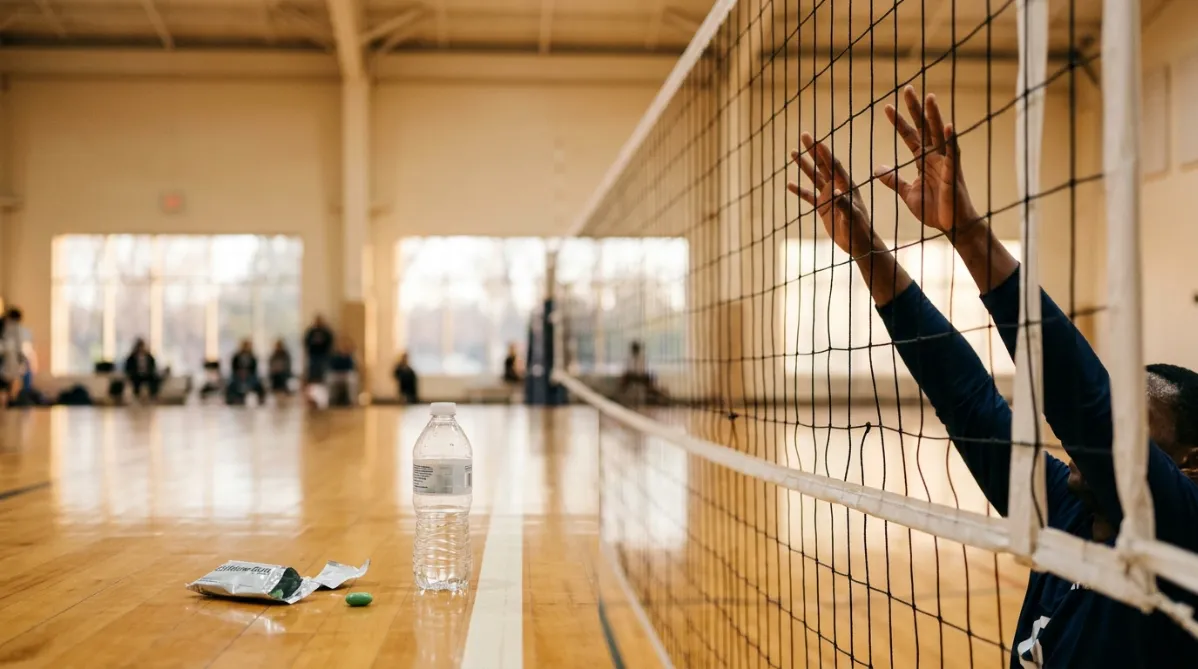
A landscape editorial photograph of a volleyball net in a softly lit indoor gym, shot from a low angle on the court. In the foreground, a pair of athletic hands in mid-block reach above the net, fingers spread, caught in crisp focus. The athlete's face is out of frame, so the attention stays on the hands and the net. In the lower left foreground, a small open foil pack of caffeine chewing gum sits on the polished maple floor, with two mint-green gum pieces beside it and a clear water bottle. The pack is unbranded and minimal.

The background is a warm blur of honey-toned hardwood, pale gym walls, and tall windows with diffused late-afternoon light streaming in. Dust motes glow in the light shafts. The palette is muted and modern: warm wood amber, soft cream, sage green, and a touch of deep navy from the athlete's jersey. Shallow depth of field and gentle film grain give the image a refined, magazine-like feel. The composition follows the rule of thirds, with the hands and net on the right and open negative space on the left, where headline text could sit.

The mood is calm, focused, and slightly cinematic, like a feature in a contemporary sports science journal. The lighting is soft and natural, with long gentle shadows across the court lines. No futuristic or digital elements, no charts, no text. The overall look is clean, tactile, and editorial.
nutrition

Fatigue Slowed Reactions 18%. Caffeine Gum Held It to 3%

BY DR. GYMBRO ·

After a brutal repeated-blocking fatigue protocol, elite volleyball players on placebo got 18.4% slower in their reactive blocking sequence. With 6 mg/kg caffeine gum, the slowdown was just 3.0%, and 3 mg/kg landed at 6.4%. Block-jump power and drop-jump stiffness also held up better with caffeine. But the study had only 15 athletes, blinding was incomplete, side effects were more common at the higher dose, and no single best dose was established. Here's what the numbers mean in real milligrams and who might actually benefit.
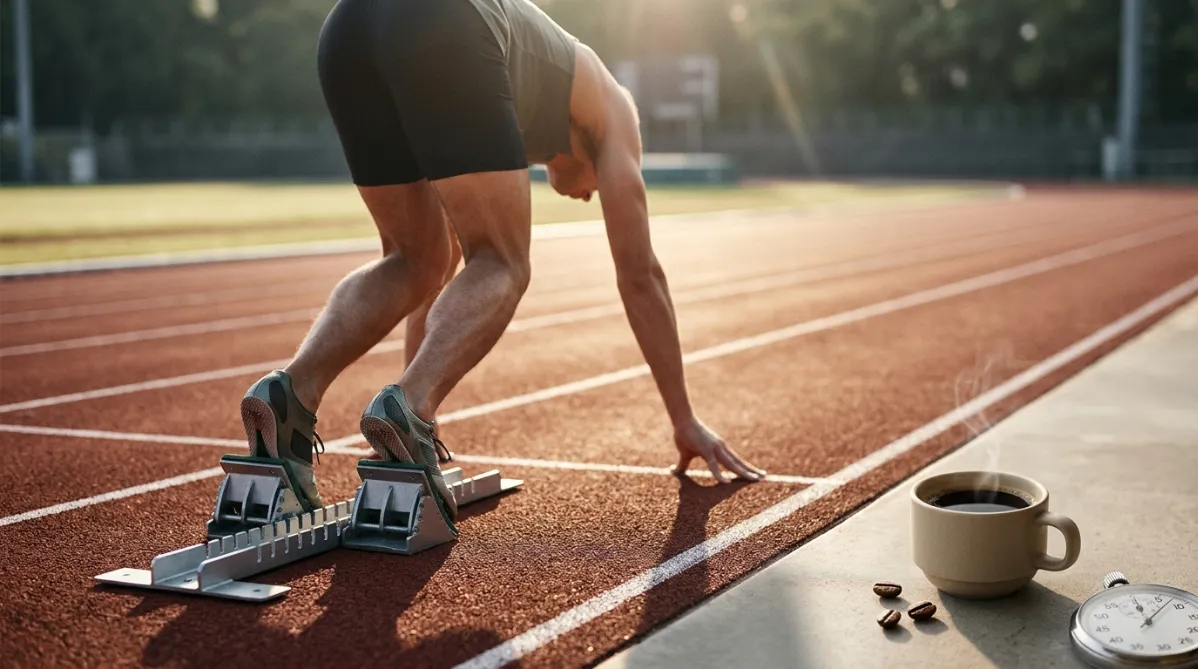
A wide, editorial-style photograph of a sprinter crouched in starting blocks on a deep terracotta-red running track, shot from a low angle at the side as the first morning light rakes across the lanes. The athlete is mid-set, hips lifted, hands poised behind crisp white lane lines, with a soft focus on their muscular calves and spiked shoes in the foreground. Warm golden sunlight creates long, elegant shadows and subtle lens flare, while the distant lanes fade into a creamy bokeh.

In the lower right foreground, slightly out of focus, sits a minimalist still life on a matte concrete ledge beside the track: a small ceramic cup of black coffee with a thin wisp of steam, two loose roasted coffee beans, and a simple stopwatch with a clean white face. The ceramic is a muted sand color, adding a refined, modern lifestyle touch.

The color palette is restrained and trendy: terracotta, warm cream, soft charcoal, and a hint of sage green from trees blurred in the far background. The composition uses generous negative space across the upper left, ideal for headline text overlay. The look is similar to a contemporary health and sports science magazine: natural film-like grain, gentle contrast, shallow depth of field, and a calm, focused mood. No text, no logos, no graphics, and no futuristic elements, just a realistic, tactile, sunlit scene that suggests precision, preparation, and explosive speed.
science research

Double the Caffeine, Faster Sprints? What 6 mg/kg Really Added

BY DR. GYMBRO ·

A new randomized, double-blind crossover trial pitted 3 mg/kg against 6 mg/kg of caffeine in 21 trained male sprinters. Both doses beat placebo, but the higher dose added extra speed only over the first 30 and 60 m, not at 10 m. It also gave extra benefit for jump height and block force development, yet nothing more for reaction time or Wingate peak power. Here is what the doses mean in milligrams for a 70 to 80 kg athlete, when to take them, who the evidence applies to, and what the study does not tell us about side effects.

A landscape editorial photograph in a bright, modern gym studio with soft natural light pouring through tall windows. In the foreground, a matte ceramic cup and a small glass jar of plain white powder sit on a light oak bench, with a wooden scoop resting beside them and a few loose grains dusted across the wood. The jar has no label, which hints at mystery without being heavy-handed. Slightly out of focus behind them, a female athlete in a sage green athletic set stands at a barbell, chalked hands gripping the bar, her expression calm and focused. A male cyclist on a stationary bike is blurred in the far background. The palette is warm neutrals: cream, soft sand, pale oak, muted sage, and a touch of terracotta, with gentle golden-hour highlights and soft shadows. The composition follows the rule of thirds, with the cup and jar in the lower left, the athlete on the right, and open negative space in the upper area for headline text. The depth of field is shallow, with a creamy bokeh background. The mood is contemplative, curious, and trendy, like a contemporary health and science magazine cover. Fine film grain, subtle matte finish, clean minimalist styling, and no text or logos.
science research

Fake Caffeine Still Made Athletes Stronger and Faster

BY DR. GYMBRO ·

What if part of your pre-workout kick is coming from your head and not the scoop? A 2026 meta-analysis of 17 studies found that a placebo athletes believed was caffeine still improved sport performance (d = 0.49), across bench press, cycling time-trials and repeated sprints. Effects were larger when researchers were blinded and in studies with more females, though the evidence is low certainty with high risk of bias. This is no reason to skip real caffeine at 3-6 mg/kg, but it is a reminder that expectation is a performance variable. Here's what the data say, and who should be cautious.
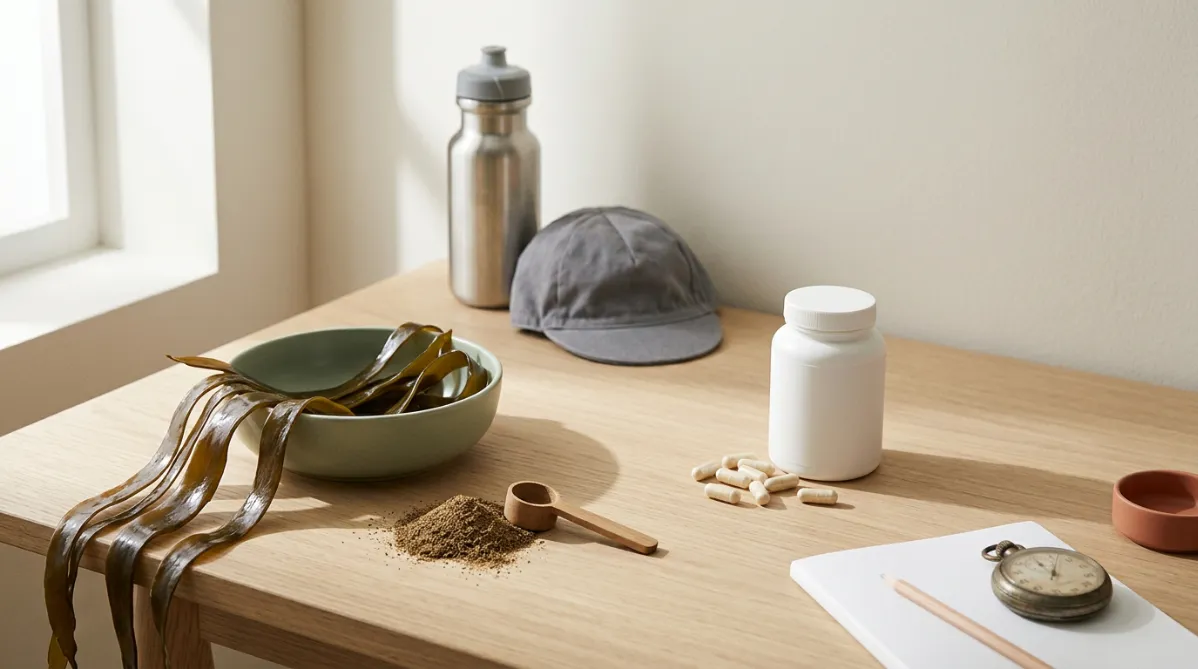
A landscape editorial still life in soft natural window light, set on a pale oak tabletop with a matte warm-white wall behind it. In the center-left, a few glossy strands of dark olive-brown kelp (Ecklonia cava) drape in an elegant curve over a shallow ceramic bowl in muted sage green. Next to the bowl, a small pile of fine, dry brown seaweed powder sits beside a minimalist wooden scoop. On the right, an unbranded matte-white supplement tub and a few loose cream-colored capsules are spilled neatly across the surface. A brushed steel cycling water bottle stands slightly out of focus in the background, with a folded gray cycling cap beside it. In the foreground, a clean white notebook with a thin pencil rests next to a simple analog stopwatch, hinting at a performance trial without any text or numbers visible.

The palette is earthy and calm: sage, olive, warm sand, cream and soft charcoal, with one subtle terracotta accent from a small ceramic dish. Long soft shadows fall diagonally across the table, and a gentle highlight catches the wet sheen of the seaweed. Shallow depth of field, with a creamy blurred background and crisp detail on the seaweed texture and capsules. The composition leaves generous negative space on the upper right for a headline overlay. Shot as if with a 50mm lens at f/2.8, top-down angle tilted about 30 degrees, in a modern wellness-magazine style that is minimalist, tactile and refined, with a subtle film-like grain and natural color grading.
nutrition

Does Brown Seaweed in Your Pre-Workout Actually Do Anything?

BY DR. GYMBRO ·

Brown seaweed extract *Ecklonia cava* shows up in pre-workouts and fat burners, but does it actually help you perform? A randomised, double-blind crossover trial gave 12 trained cyclists 263 mg or a placebo before an hour of riding and a set of maximal sprints. Blood glucose rose slightly, but lactate, oxygen uptake, fat-versus-carb use and sprint power did not change. The sample is small, so the study can't rule out tiny effects, but it offers no support for an acute performance boost. Here's what was tested, what it means and where your money may be better spent.
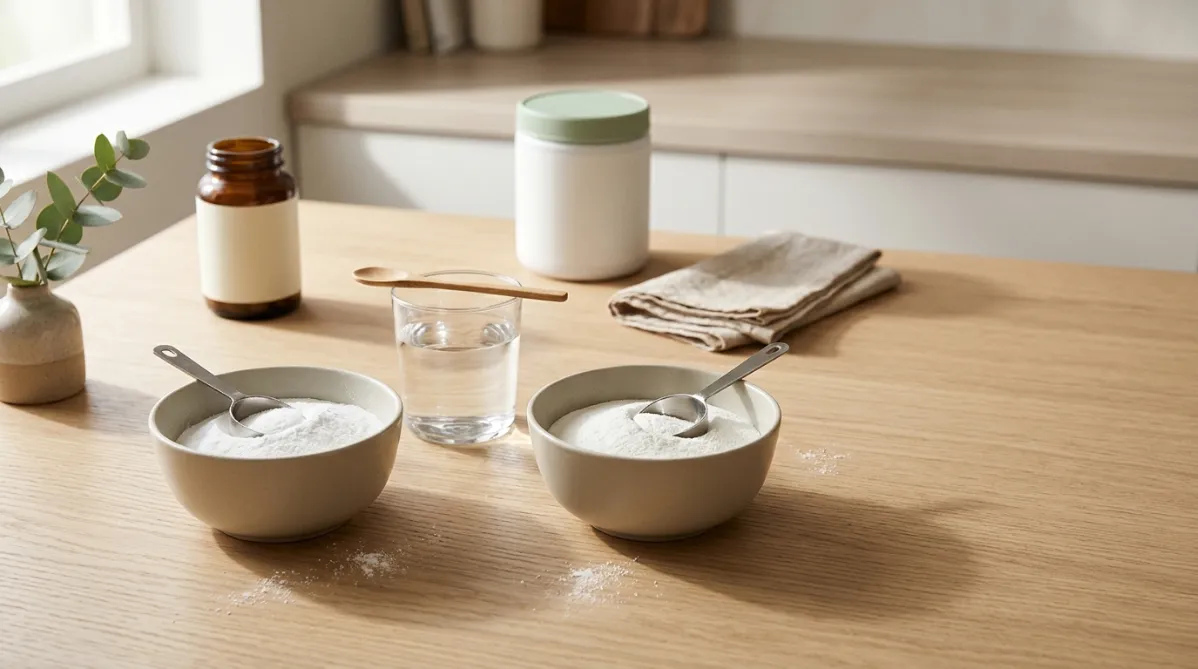
A wide, landscape editorial photograph of a clean, sunlit kitchen countertop in soft morning light. Two matching matte ceramic bowls sit side by side on a pale oak wood surface. One holds fine, bright white creatine powder, the other holds an almost identical powder, with a small stainless steel scoop resting in each. Between them sits a simple glass of water with gentle ripples and a thin wooden stirring spoon. In the soft-focus background, a minimalist amber glass supplement jar with a plain cream label and a sleek matte-white tub with a pastel sage-green lid stand slightly out of focus, suggesting a budget option and a premium option without any readable branding. A small, neatly folded linen napkin in warm oatmeal tones and a sprig of eucalyptus in a tiny stoneware vase add a calm, modern touch.

A few grains of powder are scattered naturally across the wood, catching the light. The color palette is warm neutrals with soft sage green, cream, and muted terracotta accents. The composition uses a shallow depth of field, a slightly elevated three-quarter angle, and generous negative space on the right side for title overlay. The lighting is natural window light from the left, creating long, gentle shadows and a subtle glow on the powder. The overall mood is calm, trustworthy, and thoughtful, like a contemporary health and wellness magazine or a minimalist lifestyle journal. High-resolution, crisp textures, film-like color grading, subtle grain, and a balanced, symmetrical sense of comparison between the two bowls.
nutrition

This 'Better-Absorbed' Creatine Just Matched Plain Monohydrate

BY DR. GYMBRO ·

The premium creatine market is built on promises of better absorption and a gentler stomach, but plain monohydrate has the research record and the low price. A new randomized, double-blind crossover trial tested a newer product, OptiCreatine, against monohydrate in 17 healthy young adults. After a single 5 g dose, blood creatine curves, peak levels, timing and GI symptoms were statistically similar. Here is what that means in plain words, what the study can't tell you, and how to shop smartly.
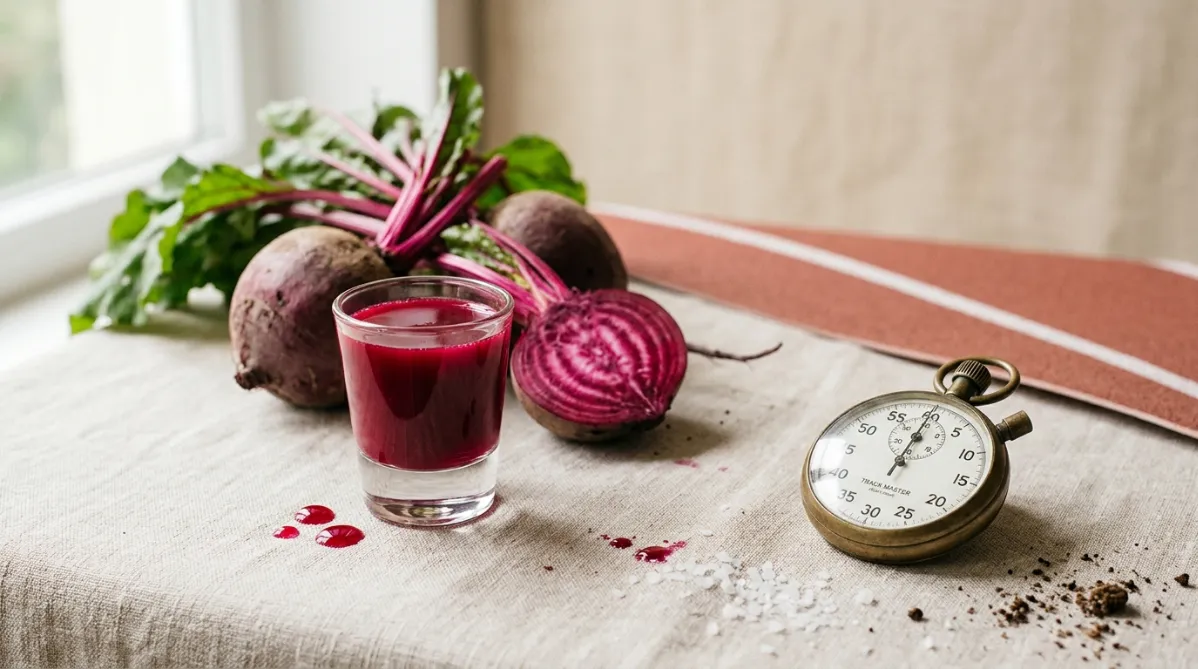
A wide editorial still life on a clean, pale oatmeal-colored linen surface, lit by soft natural window light from the left. In the center-left, a small clear glass shot glass filled with deep magenta-crimson beetroot juice catches a glowing highlight, with a few droplets beaded on the surface beside it. Behind it sit two whole beetroots with their leafy stems, the skins a dusty burgundy and the stems a vivid pink-red, and one beetroot sliced in half to reveal concentric rings of magenta and soft pink. To the right, a vintage-style brass stopwatch rests at an angle on the linen, its white face crisp and its hands frozen, slightly out of focus in the foreground edge. A faint curve of a sprinting track lane, in muted terracotta with thin white lines, sweeps diagonally across the blurred background, hinting at a running track without showing any people. Scattered across the surface are a few small, delicate beet-colored splashes and a light dusting of coarse sea salt. The palette is restrained and modern: warm cream, terracotta, dusty rose, deep magenta, and touches of sage green from the leaves. Shallow depth of field and a gentle film-like grain give it a contemporary lifestyle-magazine feel. The composition leaves generous negative space on the upper right for title overlay. Minimalist, tactile, calm, and sophisticated, in the style of a high-end health and science journal's editorial photography, 16:9 landscape.
nutrition

Beetroot Juice Boosted Nitrite 35x, But Sprinters Got No Faster

BY DR. GYMBRO ·

Beetroot juice sent salivary nitrite soaring about 35-fold in trained sprinters, which sounds like the start of a performance miracle. Then the stopwatch came out. In a randomized, double-blind, placebo-controlled study of 12 male sprinters, a 70 mL shot of beetroot juice didn't improve 60 m or 100 m times, jump height, or most measures of muscle function. Here is what was tested, what the study can't tell us, and who should save their money.
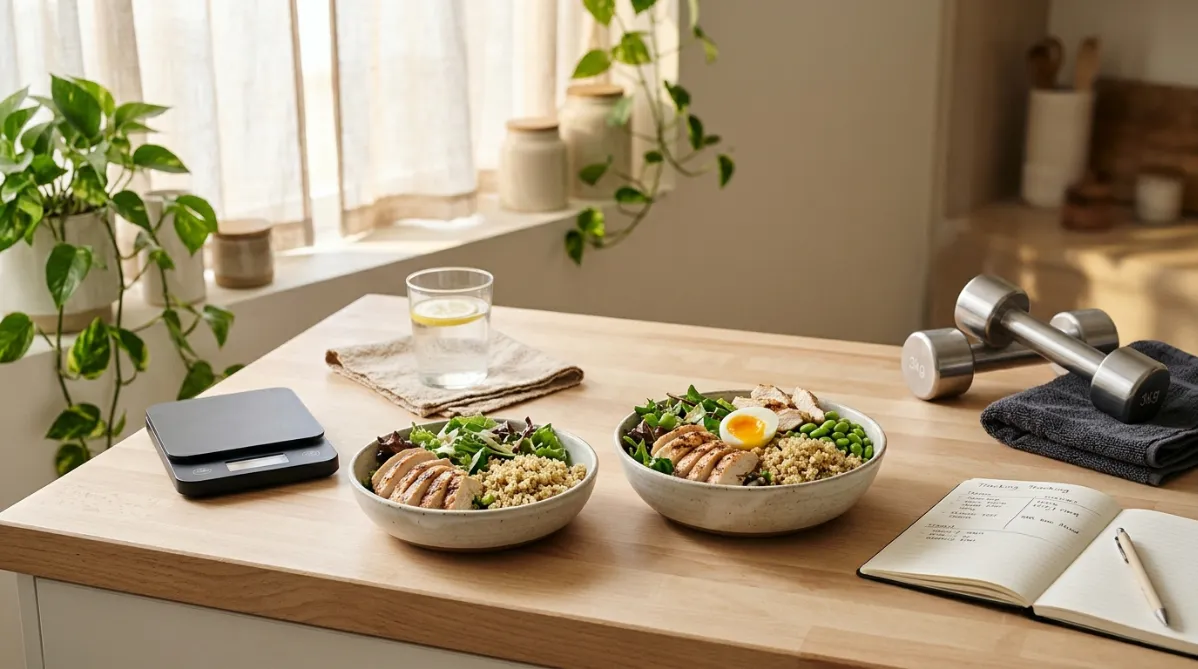
A wide landscape editorial photograph of a clean, sunlit kitchen counter in soft natural morning light, styled like a modern wellness journal cover. In the foreground, two matching ceramic bowls sit side by side on a pale oak butcher block. The left bowl holds a modest portion of sliced grilled chicken breast, quinoa, and greens. The right bowl holds a noticeably larger, double-sized portion of the same ingredients, with extra chicken, a soft-boiled egg, and edamame. The contrast in portion size is clear but elegant. Beside the bowls are a matte black digital kitchen scale, a tall glass of water with a lemon slice, and a small linen napkin in warm oatmeal tone. A pair of sleek brushed-steel dumbbells rests slightly out of focus on the counter's edge, and a folded charcoal gym towel sits next to them. In the soft-focus background, a large window with sheer curtains lets in diffused golden light, and a trailing green pothos plant adds an organic touch. A small, minimal notebook with a pen lies open to the side, suggesting careful tracking. The color palette is muted and cohesive: warm creams, sage green, soft terracotta, charcoal, and natural wood. Shallow depth of field, crisp focus on the bowls, gentle shadows, and subtle film-like grain. Composition follows the rule of thirds with generous negative space on the upper right for headline text. The mood is calm, thoughtful, and trustworthy, like a contemporary health and science magazine feature. There are no people, no text, and no futuristic elements.
nutrition

3.2 g/kg Protein for 16 Weeks: Did It Hurt Lifters' Kidneys?

BY DR. GYMBRO ·

Is eating double the usual lifter's protein secretly wrecking your kidneys? A 16-week randomized trial of 44 resistance-trained men tested 3.2 g/kg protein against 1.6 g/kg. The statistical comparison found no significant difference in kidney markers, whether men lifted alone or combined lifting with cardio. But the high-protein groups did show small rises in BUN and cystatin C and dips in eGFR, which the authors call descriptive only. Here is what that means, what the study can't tell you, and who should be careful.
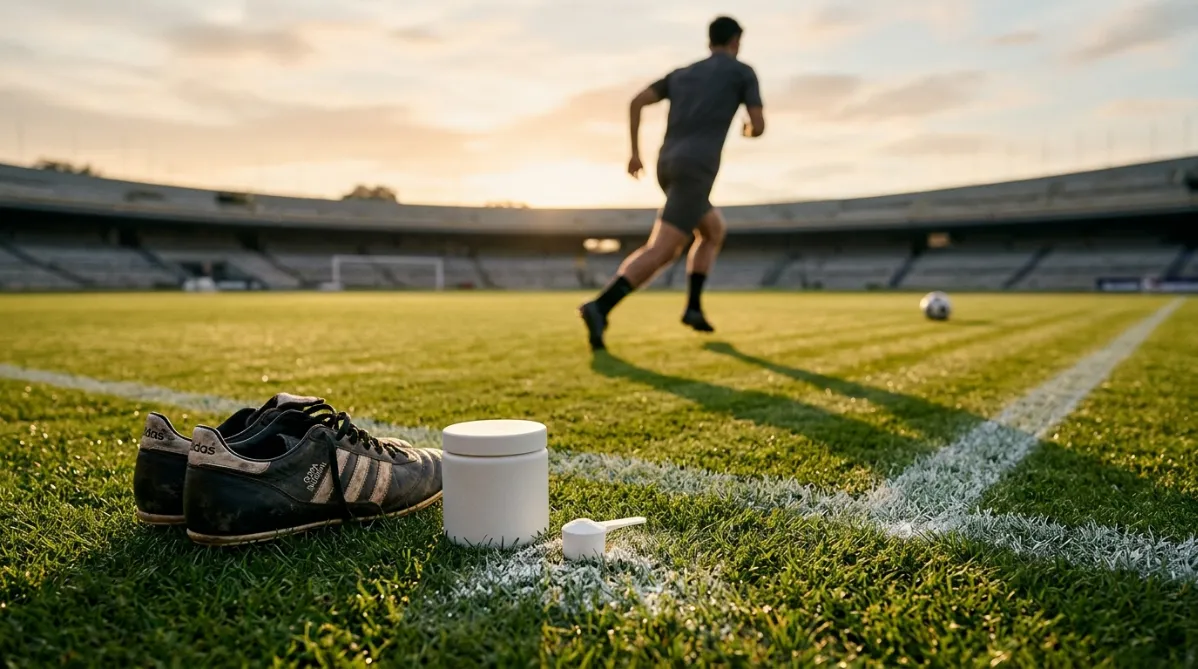
A wide, editorial-style photograph of a soccer pitch at golden hour, shot from a low angle at the edge of the touchline. In the foreground, a pair of worn leather cleats sits beside a small, matte white scoop and a minimalist ceramic jar of fine white powder resting on the dewy grass. A few loose grains of powder dust the blades of grass and catch the warm light. The jar is unbranded, with a clean, modern look.

In the midground, slightly out of focus, a lone player in a plain charcoal training kit stands mid-stride on the pitch, caught in a sprint. The motion blur in the legs suggests speed, and long shadows stretch across the freshly mowed stripes of the turf. A soccer ball rests a few meters ahead of the player.

Behind them, the stadium stands curve softly into the distance, rendered in a hazy, muted gradient of peach, soft amber, and pale blue sky. The mowing pattern on the grass forms clean diagonal lines that lead the eye toward the horizon. A thin white chalk line cuts across the frame, adding a subtle graphic element.

The palette is warm and restrained: sage and deep green grass, cream white, soft apricot light, and touches of charcoal. The mood is calm, thoughtful, and slightly skeptical rather than hyped, like a magazine feature on sports science. Shallow depth of field with a creamy bokeh background, fine film grain, and gentle natural contrast. The composition follows the rule of thirds, with the jar and cleats in the lower left and open negative space in the upper right, which leaves room for a headline overlay. The look is contemporary and clean, like a premium health and performance journal.
nutrition

Creatine for Soccer: 41 Studies, One Awkward Truth About Sprints

BY DR. GYMBRO ·

Creatine is everywhere, and soccer's sprint-heavy demands make it look like a perfect match. A new systematic review of 41 unique studies tested that idea and delivered a verdict that's more cautious than the marketing. Some trials showed benefits for repeated sprints, anaerobic power and strength, but the evidence was inconsistent and rated very low certainty. Recovery claims got little support, and body mass often rose without clear lean-mass gains. Here's what to take from it, who might benefit, and who should think twice.
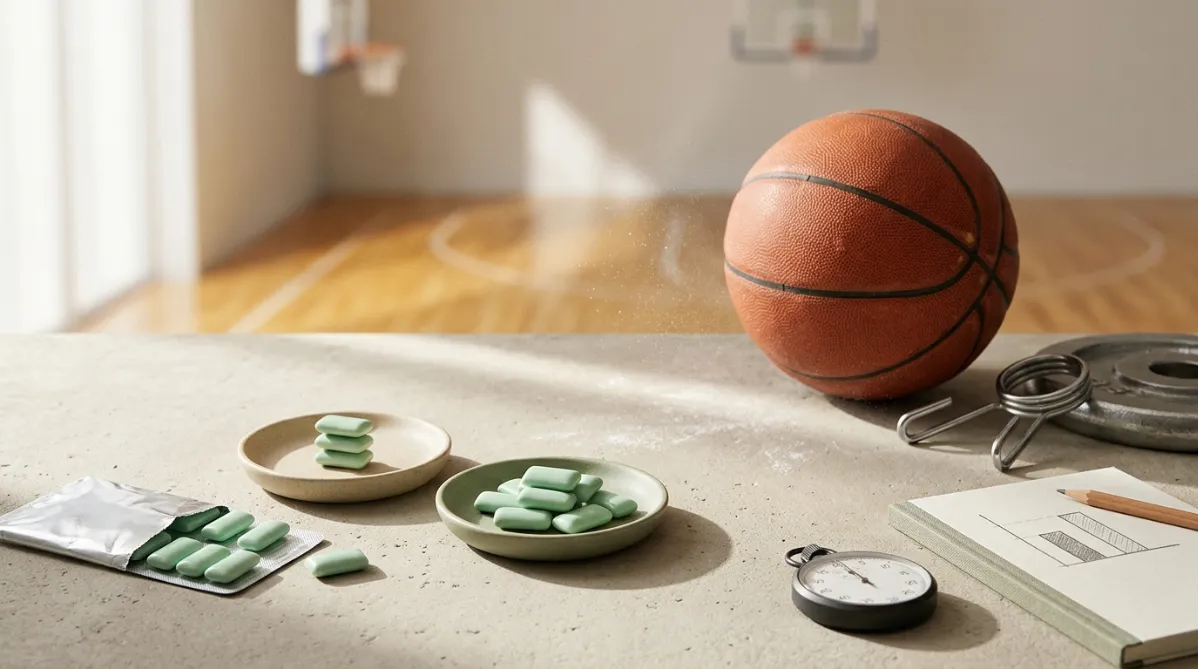
A landscape editorial still life on a pale warm-gray concrete surface, shot from a slightly elevated three-quarter angle in soft diffused morning window light. In the foreground left, a small open foil blister pack of mint-green caffeine gum sits beside two neatly arranged piles of gum pieces, one with three pieces and one with six, each on a small matte ceramic dish in oat and sage tones. The pieces are slightly glossy, rounded rectangles with crisp shadows. In the center-right, a worn leather basketball rests on the surface with deep amber-orange tones and visible pebbled texture. Next to it is a loosely chalked barbell collar and a single steel weight plate edge, partly out of focus. A minimalist analog stopwatch with a matte white face and a thin black hand lies at the lower right, and a slim notebook with a pencil rests nearby. The page shows a simple hand-drawn bar graph of two equal bars, with no legible text. In the soft-focus background, a blurred indoor basketball court with warm honey-colored hardwood and distant hoop lines fades into creamy bokeh. A narrow band of sunlight crosses the scene diagonally and picks out chalk dust particles in the air. The palette is muted and modern: sage green, warm oat, terracotta orange, charcoal, and cream. The composition leaves open negative space on the upper left for title overlay. Shallow depth of field, fine film grain, and a calm, clean magazine aesthetic like a contemporary health and science journal. No people, no text, no futuristic elements.
science research

Caffeine Gum and Same-Day Performance: Why 3 mg/kg Matched 6

BY DR. GYMBRO ·

A new crossover trial in basketball players found that caffeine gum at 3 mg/kg improved same-day strength, power, sprint speed, and reactive agility about as much as a 6 mg/kg dose. Both doses also raised barbell velocity during heavy squat priming. By 24 and 48 hours, though, the benefit was gone. The study had no baseline testing and no caffeine-only arm, so the results need careful reading. Here is what it means for dose, timing, and who might benefit.

A wide, editorial-style still life photographed on a pale warm-gray concrete surface in soft, diffused morning window light. On the left side, a tall clear glass filled with deep magenta-crimson beetroot juice sits beside two halved raw beetroots, their concentric rings of vivid fuchsia and purple clearly visible, with a few small green-and-red-veined leaves draped casually nearby. On the right side, a matching clear glass of cloudy white creatine solution rests next to a small matte ceramic bowl heaped with fine white powder and a minimal wooden scoop, a light dusting of powder scattered across the surface. In the center, between the two sides, a simple matte black barbell grip and a single chalk-dusted weight plate edge rise into the frame at a low angle, hinting at lifting without showing a person. The composition is split in a balanced, symmetrical way, with a subtle vertical shadow line dividing the saturated magenta tones on the left from cool, neutral whites and creams on the right. The background is softly blurred with a muted sage-green and oatmeal-toned wall, with plenty of negative space at the top for a headline overlay. Shallow depth of field, crisp focus on the glasses' condensation droplets and the textured beetroot flesh. The color palette is limited and refined: magenta, cream, charcoal, and soft sage. The mood is clean, modern, and health-journal chic, like a contemporary wellness magazine cover, with natural shadows, a tactile matte finish, and subtle film-like grain. No text, no logos, no futuristic elements.
nutrition

Beetroot Juice vs Creatine: Who Wins for Lifting in 72 Hours?

BY DR. GYMBRO ·

A new randomized crossover trial pitted beetroot juice against creatine over about 72 hours of supplementation in novice lifters. Creatine was the one credited with more bench press reps at 80% 1RM, while beetroot juice led on bar velocity, muscle oxygenation, peak heart rate and HRV recovery. The abstract doesn't report doses or timing, so we flag what's missing. Here's the full scorecard and who might choose which supplement.
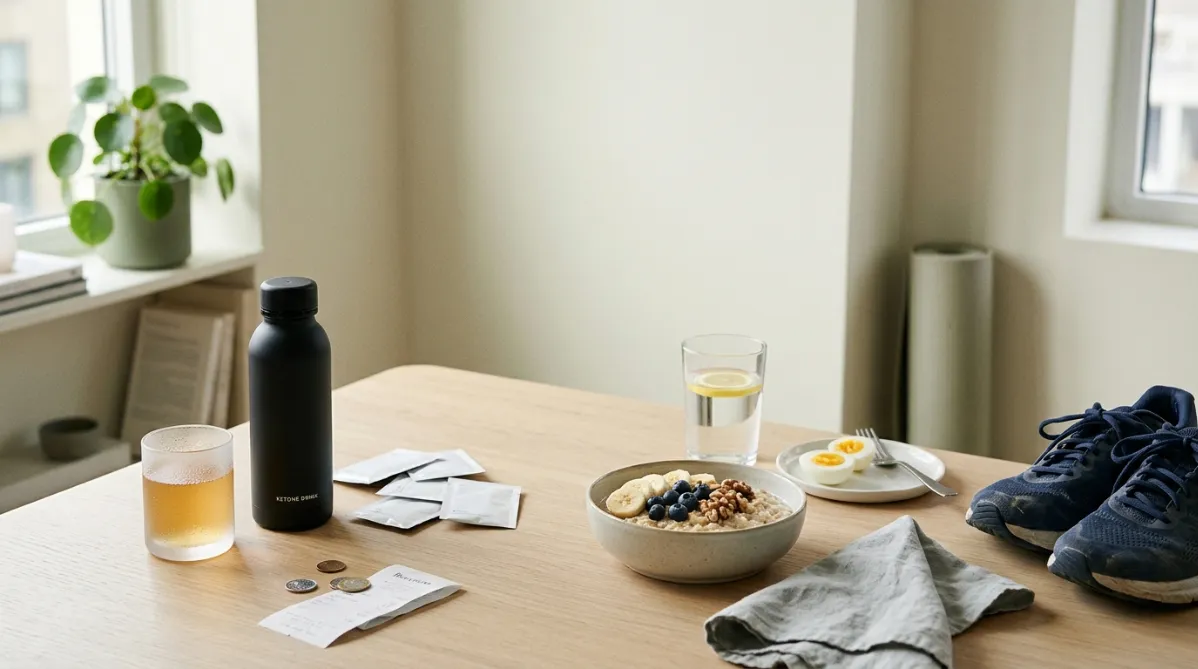
A calm, editorial still life photographed from a slightly elevated angle on a pale oak table in soft morning window light. On the left, a sleek matte-black single-serve ketone drink bottle with a minimal label stands next to a small frosted glass filled with a pale amber liquid, with a few condensation droplets on its surface. A modest scatter of small unmarked white sachets lies beside it, hinting at a pricey supplement habit. On the right, a thoughtfully arranged group of simple, proven recovery staples: a ceramic bowl of oatmeal topped with sliced banana and blueberries, a tall glass of water with a lemon slice, a boiled egg halved on a small plate, and a folded soft gray linen towel. A pair of well-worn running shoes rests casually at the edge of the frame, with a neatly rolled yoga mat leaning against the wall behind them. In the background, a softly blurred sunlit corner of a modern apartment shows a green potted plant and a cream wall. A few coins and a crisp folded receipt sit near the ketone bottle, a subtle nod to the cost question.

The palette is muted and earthy, with warm creams, sage green, soft charcoal, and touches of amber and berry blue. The light is diffused and natural, with gentle long shadows and shallow depth of field that keeps the foreground objects crisp. The composition is balanced with generous negative space across the top third for headline overlay, and the mood is thoughtful, grounded, and quietly skeptical. The look is a modern lifestyle magazine photograph, clean and minimal, with fine film-like grain and a trendy wellness-journal feel. Landscape 16:9 format.
recovery

Are Ketone Drinks Worth It for Recovery? The Data Says Probably Not

BY DR. GYMBRO ·

Ketone drinks are marketed as a recovery shortcut, but a new systematic review and exploratory meta-analysis found little to back that up. Compared with control, exogenous ketones showed no significant benefit for muscle soreness, glycogen resynthesis, creatine kinase or physical performance. Post-exercise lactate even slightly favored the control condition, and reaction-time improvements were isolated. The evidence comes mostly from active men, so there are caveats. Here's what the data mean for your wallet and what to prioritize instead.
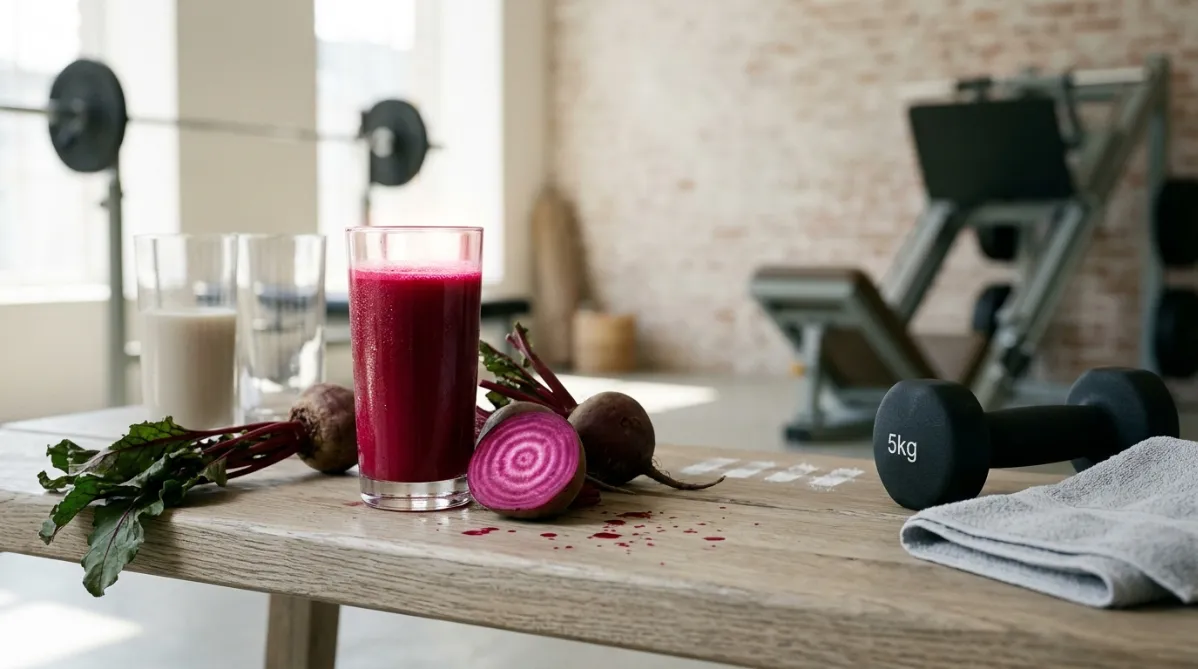
A wide, editorial-style still life photographed in soft natural window light, set on a pale oak gym bench or a light concrete surface. In the center foreground, a tall clear glass of deep magenta-crimson beetroot juice catches the light, with a faint luminous glow along its rim and condensation beading on the outside. Two other glasses sit slightly behind it, one holding a pale, neutral-colored liquid and one empty. They suggest the placebo and no-treatment conditions without any labels. Beside the glasses, a halved raw beetroot shows concentric rings of vivid fuchsia and violet. A few whole beets with their leafy stems and dark green and burgundy leaves are scattered casually nearby.

On the right side of the frame, slightly out of focus, a matte black women's-size dumbbell and a neatly folded light gray towel rest on the bench. Behind them, the soft blur of a minimalist, airy training space includes a barbell rack and a leg press machine in muted tones. The background is bright and neutral, in warm off-white, soft sand, and light gray, so the magenta of the juice is the dominant accent color.

A small, restrained motif of four evenly spaced chalk marks or four small round weight plates arranged in a neat row on the bench hints at the "four sets" of the trial. A few drops of beet juice have splashed onto the surface, forming a tasteful organic pattern.

The composition follows the rule of thirds, with the glass of juice on the left third and open negative space on the right for headline text. Shallow depth of field, crisp focus on the glass and beet, subtle film-like grain, and a calm, modern, trendy magazine aesthetic. The palette is magenta, deep burgundy, sage green, cream, and soft gray. The mood is quiet, skeptical, and scientific without any laboratory imagery, with clean lines and an elegant, minimal feel.
supplements

Beetroot Juice Didn't Add a Single Rep for Resistance-Trained Women

BY DR. GYMBRO ·

Beetroot juice is hyped as a natural rep booster, but a new double-blind crossover trial in resistance-trained women found no benefit at all. Sixteen participants drank nitrate-rich juice (12.8 mmol), a placebo or nothing before four sets of bench press and leg press to failure. Total reps, perceived exertion, heart rate, blood pressure and lactate were statistically unchanged. The findings don't bury beetroot for good, but they suggest nitrate's ergogenic effect may be limited for this population and this protocol.
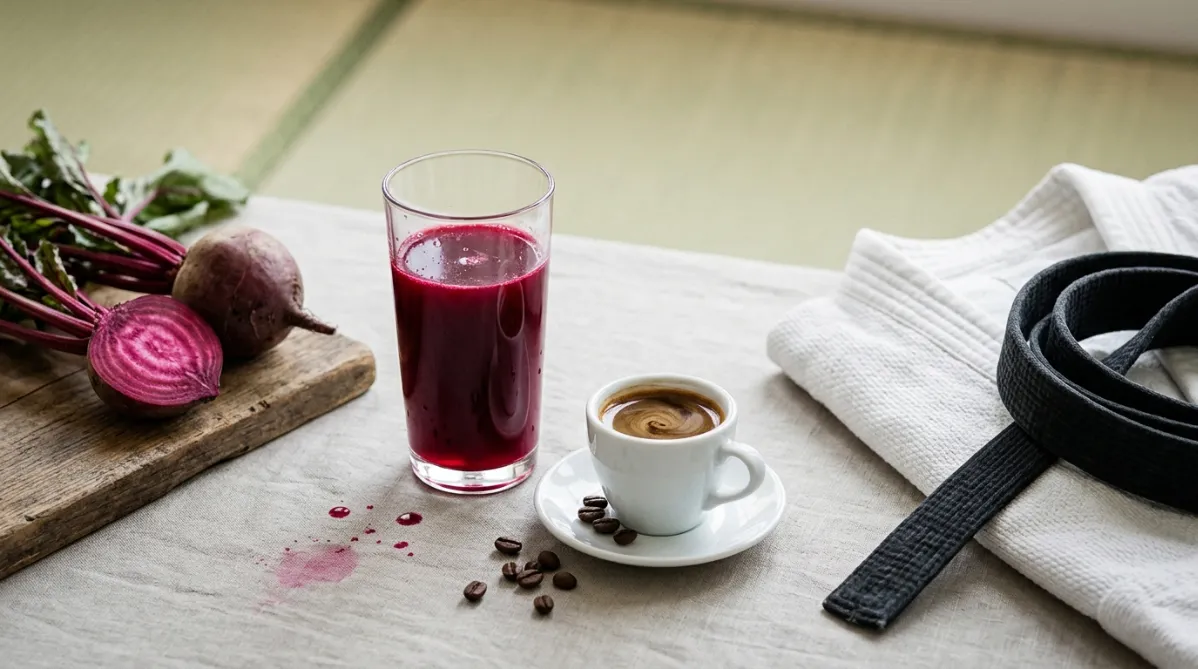
A wide landscape editorial still life on a pale warm-gray linen surface, shot from a slightly elevated three-quarter angle in soft diffused morning window light. At center-left, a tall clear glass filled with deep magenta-crimson beetroot juice catches the light, its edges glowing ruby with a few condensation droplets on the surface. Beside it sits a small white ceramic espresso cup with dark, glossy coffee and a delicate swirl of crema. A few roasted coffee beans are scattered casually near the cup's saucer. To the left, two whole raw beetroots with their leafy burgundy-veined greens still attached rest on a rustic wooden board, with one beet sliced in half to reveal concentric rings of vivid fuchsia and pale pink. A folded white judo gi sleeve with a worn black belt loosely coiled on top is draped along the right side of the frame, the cotton weave texture visible, hinting at the sport without any people. In the background, a soft-focus tatami mat texture in muted straw-green creates a subtle horizontal band, blurred into creamy bokeh. A small scattering of beet juice droplets and a faint magenta stain on the linen add an organic, lived-in touch. The palette is restrained and modern: magenta, espresso brown, off-white, muted sage, and warm beige. Composition leaves generous negative space on the upper right for headline overlay. The mood is clean, calm, and contemporary, like a premium health and science magazine cover, with shallow depth of field, crisp focus on the glass and cup, fine natural shadows, and subtle film-like grain.
nutrition

Beet Juice + Caffeine: The Judo Trick That Beat Caffeine Alone

BY DR. GYMBRO ·

Caffeine is the go-to pre-fight boost, but a new randomized trial in 35 judo athletes suggests its edge fades by the fifth bout of a simulated competition day. Beetroot juice did the opposite and helped late, while the combination covered both early and late performance. In trial 5, both beet juice and the combo beat caffeine alone on judo-specific fitness, neuromuscular function and cognition. Here is what the study found, who it may help, who should be careful, and what the abstract does not tell us.
A softly lit, minimalist gym interior photographed in a modern editorial style. In the foreground, a muscular lifter in a fitted charcoal tank top is mid-set at a cable station, forearm and shoulder muscles defined, a light dusting of chalk on their hands. The frame is shot at a slight low angle with shallow depth of field, so the background gym equipment melts into creamy blur. On a matte concrete-textured bench beside them sits a clean, unbranded matte-white scoop container of white powder, a stainless steel shaker bottle, and a small analog stopwatch, arranged with careful, magazine-style composure. A few loose grains of white powder catch the light on the bench surface.

Warm golden late-afternoon sunlight pours through tall industrial windows on the left, creating long diagonal light streaks, gentle lens flare, and a subtle haze of floating chalk dust that glows in the beams. The palette is restrained and sophisticated: warm sand, soft cream, muted terracotta, deep charcoal, and a single accent of sage green from a potted plant on a shelf. Rows of neatly racked dumbbells in dark metal repeat in the mid-ground, adding rhythm and depth.

The composition follows the rule of thirds: the lifter and supplement still life occupy the right two-thirds, while the left third remains calm, with a smooth, softly blurred wall and window light, leaving generous negative space for headline text. Subtle film grain, natural color grading, and a slightly desaturated, high-end lifestyle photography look evoke a contemporary health and science journal. No text, logos, or graphics. Clean, aspirational, grounded, and tactile, with a sense of focused effort and quiet intensity.
nutrition

Beta-Alanine Finally Works for Lifters—If You Train Like This

BY DR. GYMBRO ·

Beta-alanine has long had a murky track record for lifting, but a new randomized controlled trial may explain why. When trained lifters took 6.4 g per day for four weeks, their total reps rose 17.3% on drop sets and 18.2% on bi-sets, while placebo showed no significant gains. Perceived exertion, motivation, and affect did not differ between groups, so the boost was physical rather than psychological. Here is the dose, the loading period, who the data applies to, and who should stay skeptical.
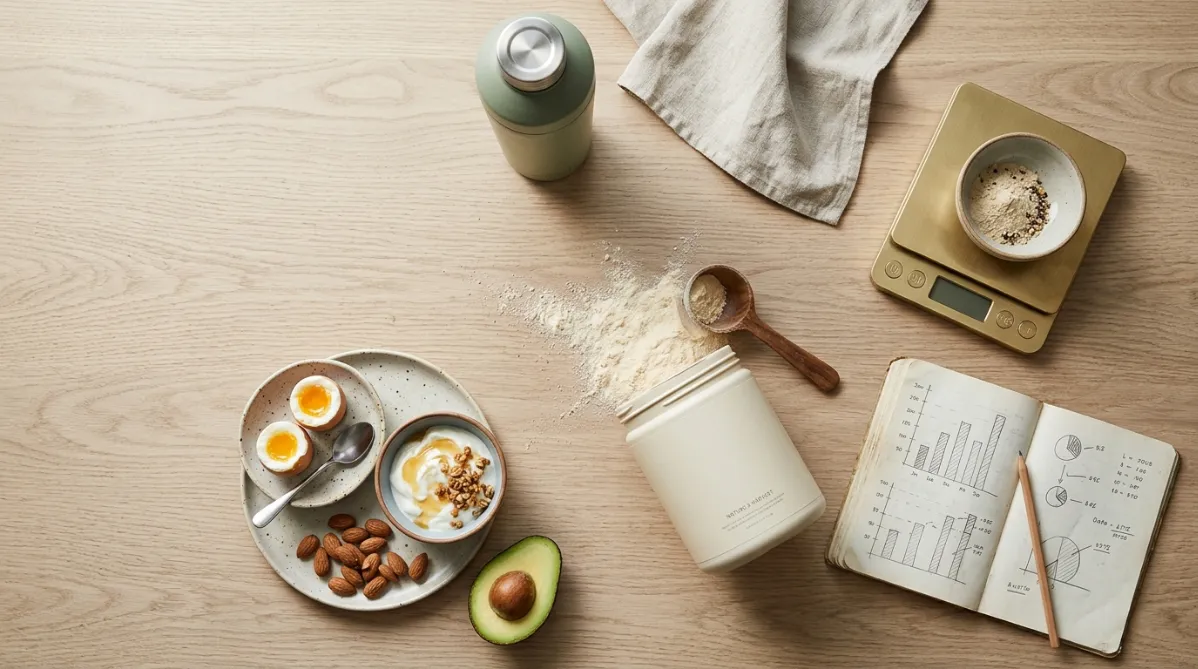
A wide, editorial-style flat lay shot from directly above on a pale oak table in soft morning window light. At the center, an open matte cream-colored protein powder tub sits tipped slightly, with a wooden scoop resting beside it and a small, elegant dusting of fine powder spilling across the wood grain. To the left, a neat balanced arrangement of whole foods: two soft-boiled eggs in a ceramic dish, a small bowl of Greek yogurt with a drizzle of honey, a handful of almonds, and a halved avocado. To the right, a minimalist brass kitchen scale holding a small ceramic bowl, with a handwritten notebook page beside it showing simple pencil-drawn bar charts and a few scribbled numbers, no legible text. A matte shaker bottle in muted sage green stands near the top edge, along with a folded linen napkin in warm oatmeal tone. The color palette is restrained and modern: warm creams, soft sage, terracotta accents, and natural wood, with gentle diffused shadows and subtle film-like grain. Composition leaves generous negative space on the left third of the frame for headline overlay. The mood is calm, thoughtful, and quietly skeptical, like a contemporary health and science magazine cover. Shallow depth of field, crisp textures on powder and ceramic, high-end lifestyle photography, clean and uncluttered.
nutrition

Protein Powder's Dirty Secret: Gains Fade When Calories Match

BY DR. GYMBRO ·

Does protein powder really make you perform and recover better, or are you just eating more calories? A Bayesian meta-analysis of 75 randomized trials and 1,206 athletes found real but limited benefits. The twist is that every significant result came from studies where energy intake wasn't matched between groups. The paper's most concrete advice is about dose: about 1 g/kg/day extra from supplements, for roughly 2 g/kg/day total. Here is what the data supports, what it doesn't say about timing and protein source, and who should skip the tub.
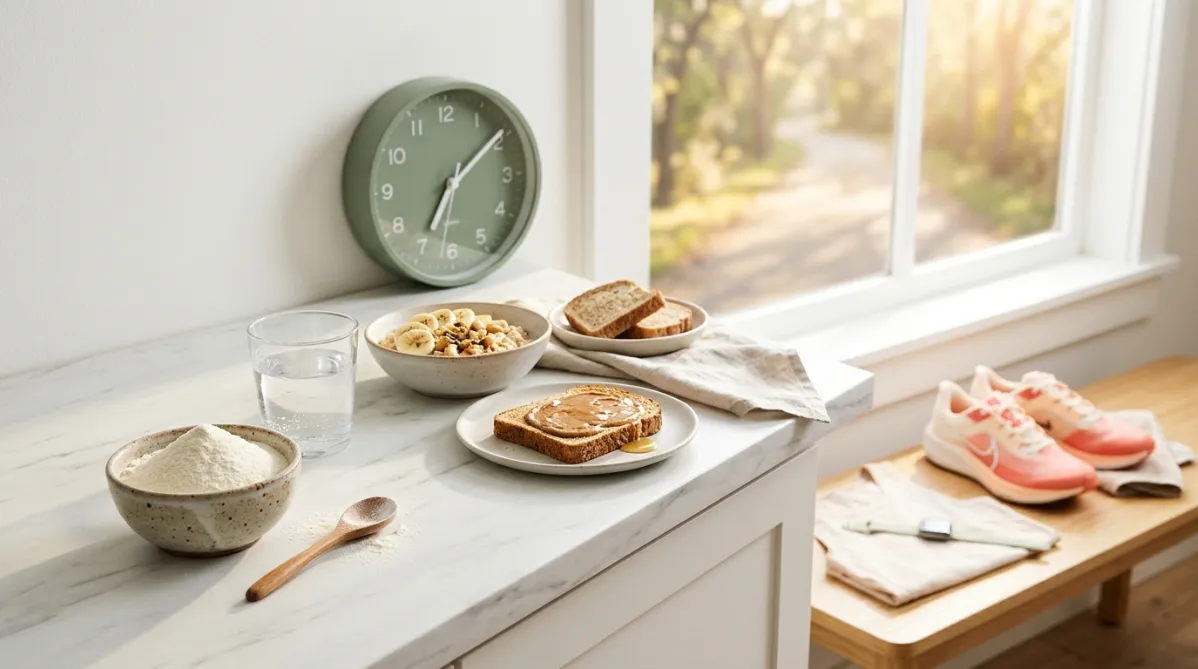
A bright, airy editorial photograph in landscape format of a clean white marble kitchen counter in soft morning light. On the left, a small rustic ceramic bowl holds a mound of fine white powder, with a wooden spoon resting beside it and a scattering of powder dusted across the marble. Next to it sits a glass of water with a faint ripple on its surface. In the middle ground, a simple breakfast spread: a bowl of oatmeal topped with sliced banana, a piece of toast with honey, and a few slices of white bread, all styled in muted, natural tones. A minimalist analog wall clock or a vintage round kitchen timer in matte sage green sits subtly in the background, hinting at the 90-minute timing.

On the right side of the frame, slightly out of focus, a pair of modern running shoes in soft coral and cream rests on a light oak floor or bench. Next to them are a folded running shirt and a slim sports watch. Through a large window behind the counter, a blurred sunlit tree-lined running path glows in warm golden light, suggesting a woman's morning run without showing a face.

The palette is soft and modern: warm whites, sage green, pale peach, light wood, and touches of coral. Shallow depth of field, gentle natural shadows, and a clean composition with generous negative space in the upper left for title overlay. The mood is fresh, trustworthy, and health-journal chic, like a high-end wellness magazine feature. Shot on a 50mm lens, crisp details, subtle film grain, and a calm, minimal, contemporary feel.
nutrition

Baking Soda Cut 32 Seconds Off Women's 10Ks—Here's the Catch

BY DR. GYMBRO ·

A cheap pantry-style compound just improved 10K times in recreational women runners, and the stomach-upset problem that usually ruins it barely showed up. In a double-blind crossover trial, 21 women ran about 32 seconds faster after sodium bicarbonate. The trick was pairing it with a carb-rich meal 90 minutes before the run. Here's the dose, the timing, who it fits, and who should think twice.
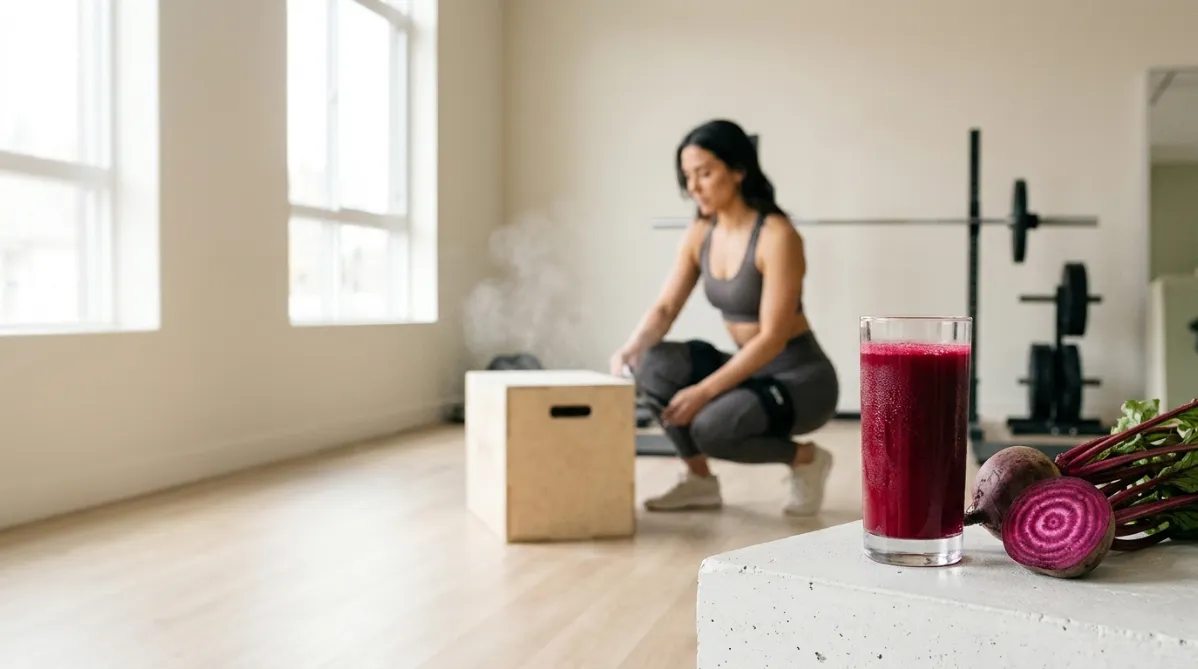
A bright, modern editorial photograph of a minimalist athletic studio with pale oak flooring and soft diffused daylight pouring in from tall windows on the left. In the foreground, slightly off-center to the right, a tall glass of deep magenta-crimson beetroot juice sits on a matte white concrete surface, condensation beading on the glass, a few fresh whole beets with leafy stems and one halved beet showing vivid concentric purple rings arranged beside it. Behind them, softly blurred with shallow depth of field, an athlete in neutral-toned athletic wear (charcoal and cream) crouches mid-prep, with slim black blood flow restriction cuff bands wrapped around the upper thighs. A clean wooden plyo box and a simple barbell rack are subtly visible in the background. A thin arc of chalk dust hangs in the air, suggesting a recent jump. The color palette is restrained and trendy: warm off-white, soft sage green, charcoal gray, with the beetroot magenta as the single bold accent. Composition follows a wide 16:9 landscape layout with generous negative space on the left third for title overlay. Lighting is natural, gentle, and slightly golden, with soft shadows and a subtle film-grain texture. The overall feel is a contemporary wellness and sports science magazine cover: clean, calm, sophisticated, tactile, with crisp detail on the juice and beets and a dreamy blur on the athlete.
science research

Beetroot Juice + BFR Training: The Fatigued Jump Edge Strength Missed

BY DR. GYMBRO ·

Everyone assumes beetroot juice plus blood flow restriction training means bigger strength gains. This randomized, double-blind trial found something more specific: both groups got stronger, but only the beetroot group showed a significant improvement in fatigued countermovement jump height. The study used 8 mmol of nitrate per day, a one-week loading phase and a four-week BFR program. Here's the protocol, who might benefit, who should skip it, and why a 20-person study deserves caution.
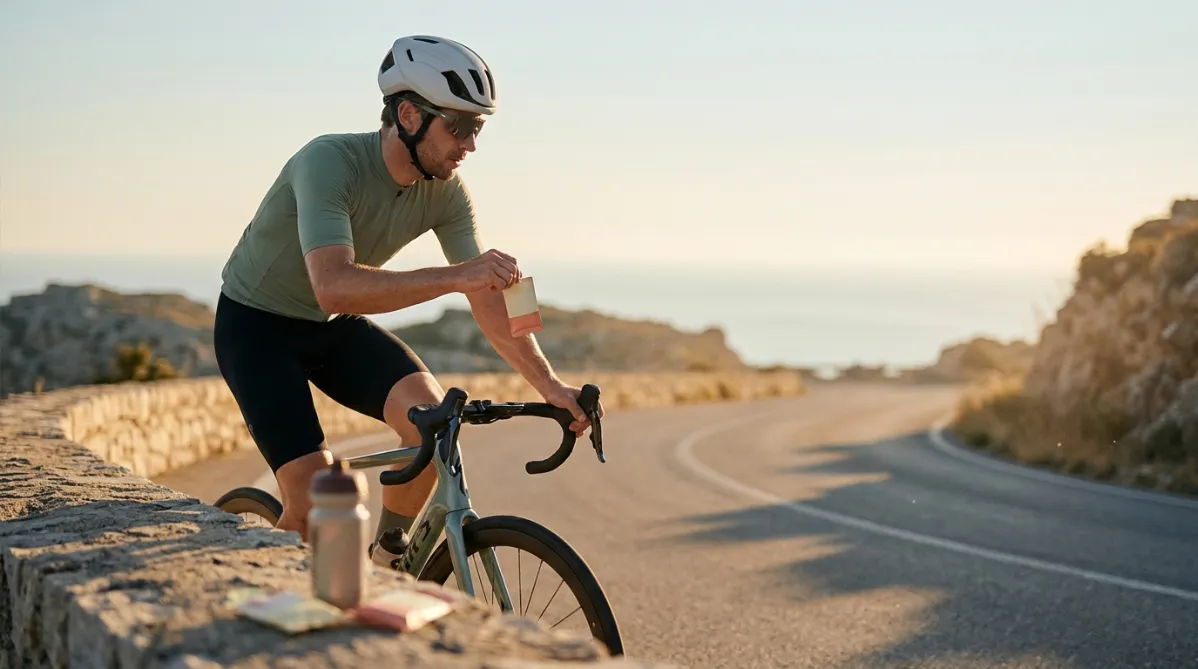
A cyclist in profile, riding a sleek road bike along a quiet coastal road in warm golden-hour light, shot from a low side angle with a shallow depth of field. The rider wears a muted sage-green jersey, black bib shorts, a matte white helmet, and sunglasses. Their face shows calm, focused fatigue, with a faint sheen of sweat on the forearms. One hand is lifted slightly from the handlebars, holding a small, unbranded matte gel packet in soft cream and coral tones, just before opening it. The road curves gently behind them toward a hazy, softly blurred horizon of pale sea and distant hills, with long amber shadows stretching across the asphalt.

In the foreground, slightly out of focus, a few gel sachets and a bike bottle rest on a weathered stone wall at the left edge of the frame, adding editorial depth. Fine dust and sunlight glow in the air. The palette is warm and restrained: butter yellow, soft peach, sage, and slate blue, with gentle film-like grain. The composition leaves open negative space in the upper right, a pale gradient sky, for headline overlay. The overall look is a modern, minimalist sports-science magazine photograph: natural, premium, and clean, with realistic textures, cinematic but understated color grading, and no text, logos, or graphics.
nutrition

Bicarb Gels Mid-Ride Added 12 W Late in a 3-Hour Cycling Test

BY DR. GYMBRO ·

What if the best time to take bicarbonate isn't before the race, but during it? A new randomized crossover trial in 11 trained cyclists tested bicarbonate-plus-carb gels across 3 hours of riding. In the fatigued state afterward, 12-minute time-trial power was 12 W higher than with carbs alone, and stomach symptoms didn't differ. But sprints and 2-minute efforts showed no significant gain, the sample was tiny, and the products came from MNSTRY. Here's what the numbers really say.
A wide editorial still life on a pale, warm-toned concrete surface in soft morning window light. In the center-left, a shallow matte ceramic bowl holds a small pile of bright red coffee cherries with glossy skins, a few sliced open to reveal pale mucilage and paired green-tan beans. Beside it, a small glass dish of fine, golden-brown powdered extract with a tiny wooden scoop resting on its edge. A sprig of coffee plant leaves, deep green and waxy, arcs across the foreground.

On the right side, slightly out of focus, a sleek road cyclist's handlebar and a matte black water bottle lean against a light plaster wall, suggesting athletic training without showing a person. A minimalist analog stopwatch with a clean white face and thin black hands sits in the mid-ground, angled toward the camera, its hands paused near the fifteen-minute mark. A folded linen cloth in oatmeal beige and a single small espresso cup with a thin crema ring add quiet texture.

The color palette is restrained and modern: cherry red, sage green, cream, soft terracotta, and charcoal accents. Light comes from the left, casting long, gentle shadows with a subtle warm glow and a hint of dust in the air. Shallow depth of field with crisp focus on the cherries and stopwatch, creamy bokeh in the background. Composition leaves open negative space in the upper right for a headline overlay. The overall feel is a clean, trendy health-and-science magazine cover: tactile, natural, minimal, and calm, shot in a 16:9 landscape frame with fine film-like grain and true-to-life tones.
nutrition

Coffee Cherry Extract: 200 mg Caffeine Lifted Cycling Output 4.6%

BY DR. GYMBRO ·

A low 200 mg caffeine dose from whole coffee cherry extract helped trained cyclists produce 4.6% more work in a 15-minute time trial. But the popular idea that it speeds up glycogen refuelling didn't hold up. This randomized, double-blind crossover trial involved just 12 cyclists and was industry-funded, with no plain-caffeine comparison group. Here's what the data show, what they don't, and who might want to try it.
A wide, editorial-style flat lay photographed from above on a pale warm-gray linen surface in soft natural window light. At the center, a small open amber glass jar tips gently onto its side, spilling a few cream-colored capsules across the fabric. Next to the jar sits a loose arrangement of fresh mushrooms: a cluster of golden-tan reishi with glossy, lacquered caps, a few slender white enoki stems, a halved shiitake showing its pale gills, and a curl of turkey tail with concentric bands of rust, cream, and charcoal. A small wooden scoop holds a pile of fine beige mushroom powder.

On the left third of the frame, a matte black sports watch with a minimal face lies beside a folded sage-green running shirt and a pair of lightweight off-white running shoes, hinting at athletic training without showing a person. A slim white notebook with a single pencil rests nearby, open to a blank page with a faint hand-drawn line graph trending upward, in thin graphite strokes.

On the right side, a pair of clear glass beakers and a single small petri dish with a soft amber-tinted liquid add a subtle laboratory note, kept calm and organic. A single sprig of dried herbs and a few scattered oat-colored grains add texture.

The palette is earthy and refined: oatmeal, soft sage, terracotta, warm amber, and charcoal accents against the muted neutral background. Shadows are soft and diffused, with a gentle highlight on the glass and the glossy reishi cap. The composition leaves generous negative space in the upper right for a headline overlay. Shallow depth of field blurs the edges slightly, while the central mushrooms and capsules stay crisp. The overall feel is modern, clean, and trendy, like a wellness and science magazine cover, with tactile natural textures, minimal styling, and a quiet sense of curiosity and skepticism.
science research

A Mushroom Capsule Lifted VO2max 14.8%—But There's a Big Catch

BY DR. GYMBRO ·

A mushroom capsule, 40 days, and a 14.8% rise in VO2max sounds almost too good to be true. In this new Antioxidants paper, 50 young male athletes taking 320 mg/day of a beta-glucan-rich multi-mushroom extract improved from 46.26 to 53.12 mL/kg/min. The big catch is that there was no placebo group, no randomization and no blinding, and the athletes kept training throughout. Cell experiments on rat heart cells add a hypoxia-related hint, but they tested single compounds, not the capsule. Here's what the study found, what it can't tell us, and who should think twice.
A sleek aluminum energy drink can and a matte scoop of white pre-workout powder sit side by side on a pale concrete gym bench, lit by soft morning window light. The can is slim and minimalist, with a muted sage green label and no legible text. Beside it is a clear glass shaker half full of cloudy, lightly frothy liquid with condensation beading on its surface. A few fine grains of powder are scattered across the bench, catching the light. Behind them, slightly out of focus, a stainless steel barbell rests on a rack, and a folded charcoal gym towel sits at the edge of the frame.

The color palette is warm neutral: oatmeal, soft gray, and sage, with a single accent of pale citrus yellow from a halved lemon wedge placed near the glass. A thin, elegant shadow from the window blinds falls diagonally across the scene, giving it an editorial, magazine-style rhythm. The composition leaves generous negative space on the right third of the frame, a smooth blurred wall in warm off-white, suitable for headline text overlay.

The shot is a low-angle, shallow depth-of-field product-style photograph, as if taken with an 85mm lens at f/2. The foreground objects are tack sharp and the background melts into creamy blur. The mood is calm, clean, and modern, like a wellness or science journal feature. Subtle film grain and gentle contrast add a tactile, contemporary lifestyle feel. There are no people, no logos, and no futuristic or sci-fi elements, just a quiet, considered still life that suggests the choice between a canned drink and a scooped supplement.
nutrition

Your Energy Drink May Work Like a Pre-Workout—With One Catch

BY DR. GYMBRO ·

Caffeine and taurine sit side by side in energy drinks and pre-workouts, but does the pair actually boost performance? A new meta-analysis of 11 randomized trials (234 participants) found moderate improvements in peak power and time to exhaustion, plus lower perceived effort. Heart rate didn't budge, and the reaction-time result was too inconsistent to trust. The catch is that the studies were small and can't show whether taurine adds anything beyond caffeine. Here's what the data say, and who should think twice.
A landscape editorial photograph with a modern, clean magazine feel, shot on a pale warm-gray concrete surface in soft natural window light from the left. In the foreground, two matte white ceramic espresso cups sit side by side. The left cup holds a small amount of dark espresso with golden crema. The right cup is filled twice as high. Beside them, two small stainless steel scoops hold fine coffee-colored powder, one half full and one heaped, suggesting a dose comparison without any text or labels. A pair of worn red leather boxing gloves rests slightly out of focus behind the cups, laces loosely draped, with a white hand wrap rolled neatly beside them. A minimalist digital kitchen scale in matte black sits at the edge of the frame, with a few roasted coffee beans scattered across the surface. In the soft-focus background, a boxing gym corner appears: a hanging heavy bag in muted charcoal, pale wood plank flooring, and a tall window with diffused morning light. The palette is warm cream, espresso brown, brick red, and soft slate gray, with gentle shadows and a shallow depth of field. The composition follows the rule of thirds, with the cups and scoops in the lower left third and open negative space on the right for headline overlay. The look is tactile and refined, like a high-end health and performance journal. It has natural grain, subtle contrast, and a calm, confident mood. There are no people, no text, no logos, and no futuristic elements.
nutrition

Doubling Your Caffeine Barely Helped Boxers—Here's What Did

BY DR. GYMBRO ·

Think a double scoop of pre-workout means double the performance? A new crossover trial in 15 competitive boxers compared 3 mg/kg and 6 mg/kg of caffeine, and the bigger dose was not consistently better. Both doses raised jump height and power at 60 minutes, while 6 mg/kg only pulled ahead on a few outcomes like ballistic push-up power and knee torque. Here is the mg-per-kg conversion for common body weights, the timing the data supports, and the honest caveats, including that punching itself was never tested.
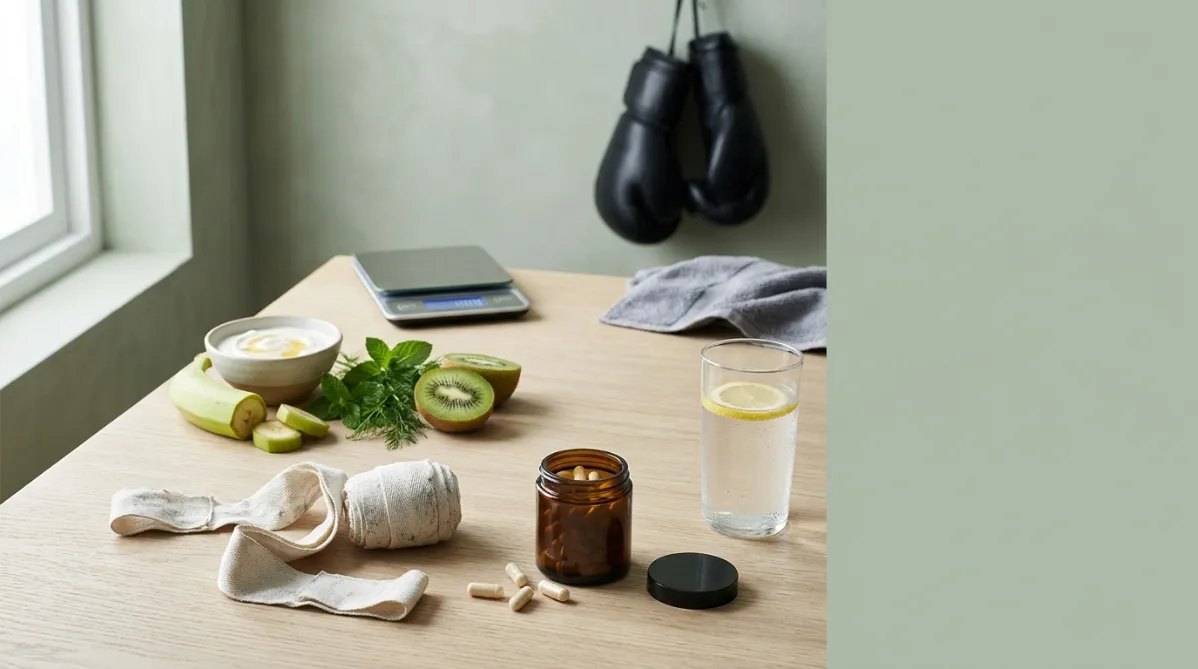
A wide, editorial-style still life photographed in soft natural window light on a pale oak table, styled like a modern wellness journal cover. In the foreground, a pair of worn white boxing hand wraps lies loosely coiled beside a small amber glass jar of probiotic capsules, its lid set to the side and a few cream-colored capsules spilled onto the wood. Next to them sits a tall glass of water with a thin slice of lemon, condensation beading on the surface. A neat bundle of fresh gut-friendly foods is arranged in the midground: a small bowl of plain yogurt with a drizzle of honey, sliced green banana, a few sprigs of fresh herbs, and a halved kiwi with glistening seeds. Behind them, slightly out of focus, a compact digital kitchen scale shows a lowered weight on its display, and a folded gray athletic towel rests beside a pair of black boxing gloves hanging from a hook against a muted sage-green plaster wall. The color palette is calm and sophisticated: sage green, warm oatmeal, soft cream, faint amber highlights, and touches of charcoal. Light streams in from the left, casting long, gentle shadows and a subtle golden glow across the textures of linen, wood, and glass. Shallow depth of field with a creamy bokeh background, crisp detail on the capsules and the hand wraps. Clean negative space on the right third of the frame leaves room for a headline overlay. The mood is fresh, restorative, and athletic, with a minimalist and refined composition, shot as if on a full-frame camera with an 50mm lens, high-end lifestyle magazine photography.
nutrition

Cutting Weight Wrecks Your Gut. A Probiotic Cut Leaky-Gut Markers

BY DR. GYMBRO ·

Rapid pre-fight weight cuts are notorious for wrecking digestion, and a new randomized trial suggests a probiotic may help. In 24 elite male combat athletes, four weeks of a complex sports probiotic taken twice daily reduced GI symptoms and lowered zonulin, I-FABP, and D-lactate compared with placebo. The probiotic group also had higher SIgA, lower inflammation, and more butyrate-producing bacteria. The study is small, uses a multi-strain product, and reports no performance data, so the findings are promising rather than definitive. Here is what the trial showed and how fighters might apply it.
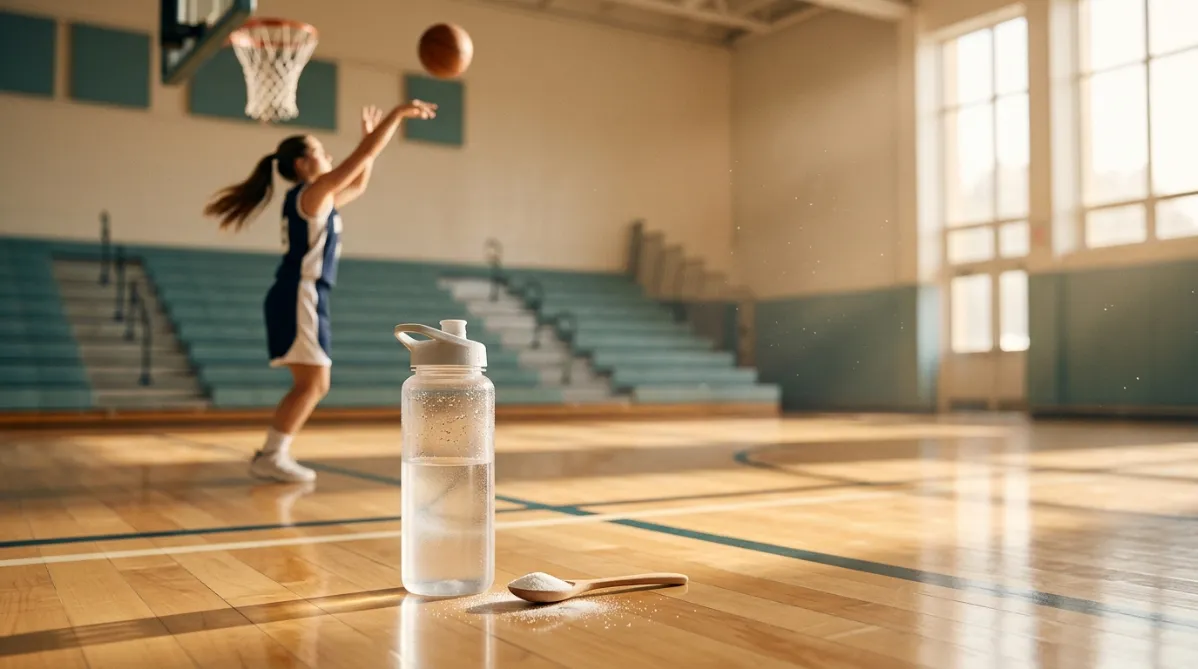
A wide, editorial-style photograph of a hardwood basketball court at golden hour, seen from a low angle near the baseline. In the foreground, slightly off-center to the left, sits a clear sports water bottle on a polished maple floor. It is half full, with tiny beads of condensation on the surface and a faint cloudy shimmer in the liquid. Beside it rests a small wooden spoon dusted with fine white powder, and a few loose grains are scattered on the wood. Warm amber light streams through tall gym windows on the right and casts long soft shadows across the court's painted lines.

In the mid-ground, slightly out of focus, a female basketball player in a navy and white uniform is caught mid-shot. Her arm is extended in a clean follow-through, her wrist relaxed, and the ball is just leaving her fingertips. Her ponytail swings behind her. Behind her, the net hangs crisp against a softly blurred bleacher background in muted teal and cream.

The palette is calm and modern: honey-toned wood, warm cream, deep navy, and soft teal accents. A shallow depth of field gives creamy bokeh in the background, with subtle dust motes floating in the light beams. The composition leaves generous negative space on the upper right for title text. The mood is fresh, athletic, and clean, like a contemporary health and performance journal. The photographic style is natural and film-like, with fine grain, soft contrast, and gentle highlights.
nutrition

The Glutamine Dipeptide That Kept Shooters Accurate When Water Didn't

BY DR. GYMBRO ·

Water is the default hydration advice, but a small study of Division I basketball players suggests it may not protect shooting accuracy as well as water with a little L-alanyl-L-glutamine. Ten women played four 40-minute games, and the low dose of 1 g per 500 ml beat water by 11.1% on shooting. The higher dose did not do better on shooting, and jump power didn't change at all. Here are the numbers, the practical takeaways, and the caveats you should weigh before stirring any of it into your bottle.
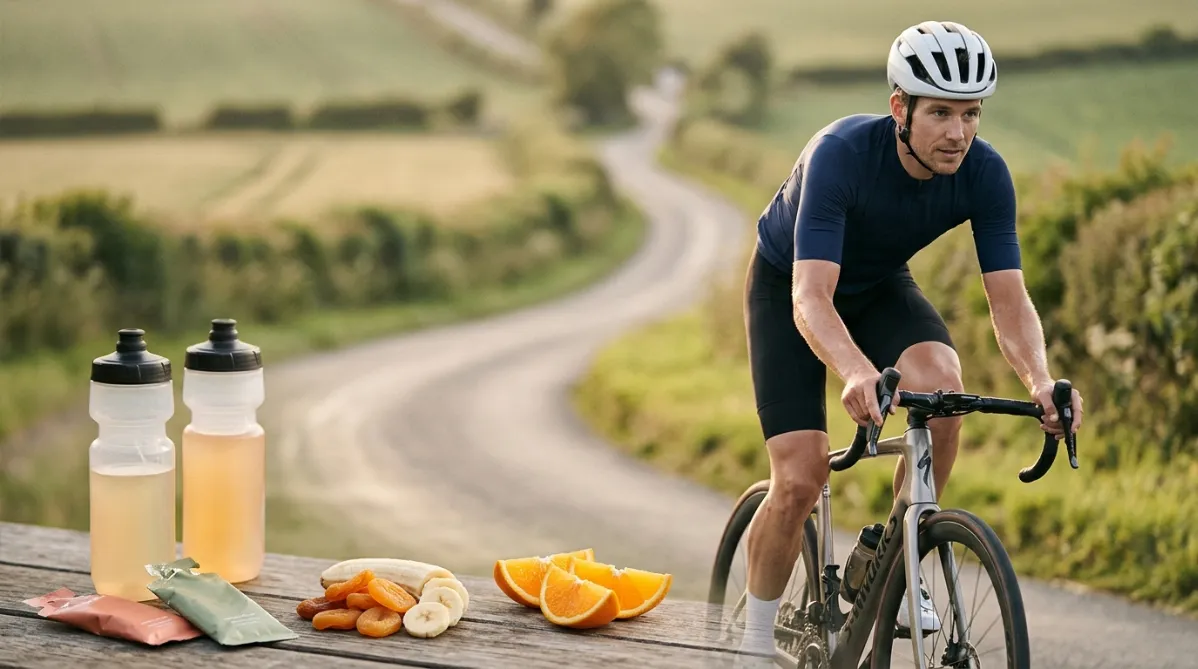
A cyclist in mid-ride, photographed from a low three-quarter side angle on a quiet country road at golden hour, wearing a matte navy jersey and a white helmet, with soft warm light catching the sweat on his forearms. His expression is calm and focused. The road bends gently through rolling green fields, and the background is softly blurred with creamy bokeh.

In the foreground on the left, a styled flat-lay-inspired still life sits on a weathered wooden surface and blends into the scene. It includes two clear water bottles with pale citrus-tinted liquid, a few torn energy gel packets in muted coral and sage, and a small pile of dried apricots and sliced banana. A handful of glossy orange slices adds a bright accent. The shallow depth of field keeps the cyclist sharp in the middle distance while the foreground items are gently softened.

The color palette is warm and editorial: soft peach, muted terracotta, sage green, cream, and deep navy. The light is natural and golden, with long, gentle shadows and a slight film-grain texture, like a high-end lifestyle or sports-science magazine spread. The composition follows the rule of thirds, with the cyclist on the right third and open negative space in the upper left, suitable for headline overlay.

The mood is energetic yet thoughtful, clean and modern, and the photograph feels authentic rather than staged. There are no logos, no readable text, and no futuristic or sci-fi elements. The overall look is crisp, airy, and refined, in the style of a contemporary health and performance journal cover.
nutrition

100 g Carbs an Hour Kept Cyclists Faster—And Glycogen Wasn't Why

BY COACH RYAN ·

Four hours into a hard ride, cyclists who fueled with 100 g of carbs per hour lost less power than those who took 60 g. The surprise is that their muscle glycogen ended up about the same. This randomized, double-blind crossover study of 15 trained men points to something beyond glycogen sparing. We break down the numbers, the 1:0.8 glucose:fructose protocol, and how to apply it. We also cover who should skip it and why the small, male-only sample matters.
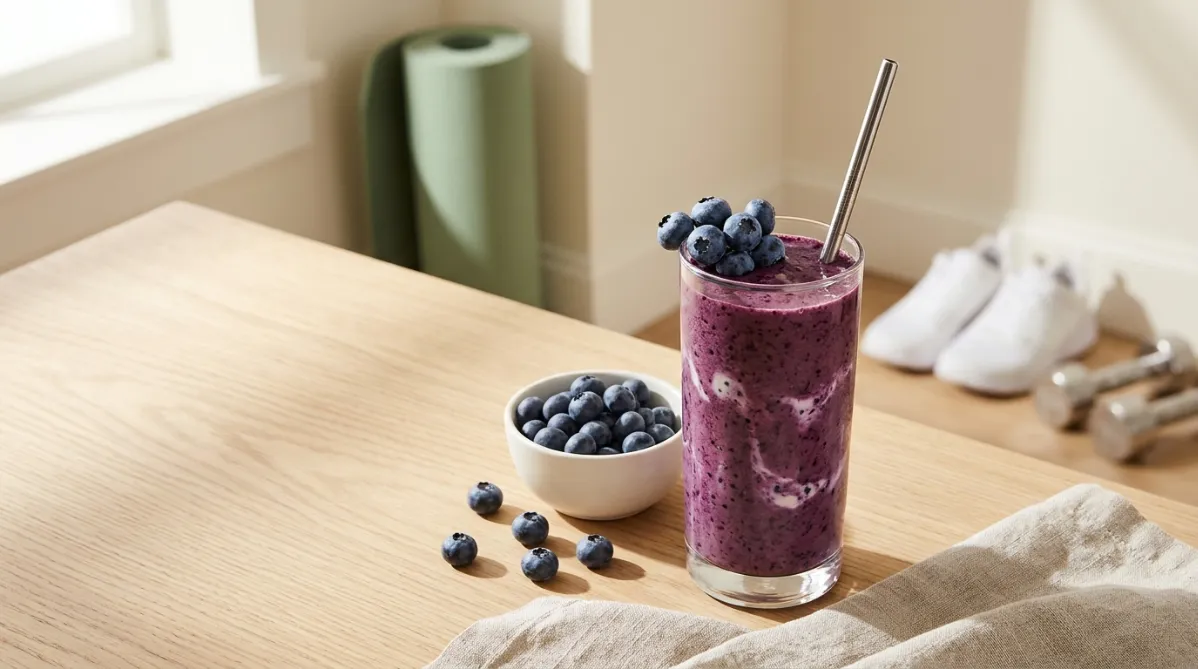
A bright, airy editorial photograph shot from above at a slight angle, showing a tall clear glass of deep violet blueberry smoothie on a pale oak wooden table. The smoothie has a creamy, velvety texture with a few lighter swirls, and a small cluster of fresh blueberries with dusty blue skins rests on the rim of the glass. A matte white ceramic bowl of whole blueberries sits to the left, with a few berries scattered naturally across the tabletop. A folded linen napkin in soft oatmeal tones and a stainless steel straw add subtle texture.

In the softly blurred background, a rolled-up sage green yoga mat leans against a light wall next to a pair of clean white running shoes and a small pair of brushed-metal dumbbells. A sliver of warm morning sunlight enters from the left window, casting gentle diagonal shadows and a golden glow across the table, with soft highlights on the glass and the berries' surface bloom.

The color palette is fresh and modern: deep indigo and violet from the smoothie, balanced by cream, warm beige, soft sage green, and touches of white. The composition follows the rule of thirds, with the glass placed on the right third and generous negative space on the left, suitable for headline overlay. Shallow depth of field, crisp focus on the glass and berries, creamy bokeh in the background. The mood is calm, healthy, and aspirational, like a contemporary wellness magazine or a trendy health journal website. Natural, realistic, high-end food and lifestyle photography style, 16:9 landscape format, clean and uncluttered.
nutrition

Blueberry Smoothie Helped Sore Legs Regain Strength Faster

BY DR. GYMBRO ·

Ten women, 300 brutal eccentric quad contractions, and one blueberry smoothie. In this randomized crossover trial, the berry drink sped up the recovery of peak isometric strength over 60 hours (p = 0.047), while a placebo matched for antioxidant capacity did not. That means the benefit probably wasn't just about antioxidants. Only one outcome reached significance and the sample was tiny, so the evidence is promising rather than conclusive. Here is how the study worked, what it found, and how to use it around your hardest leg days.
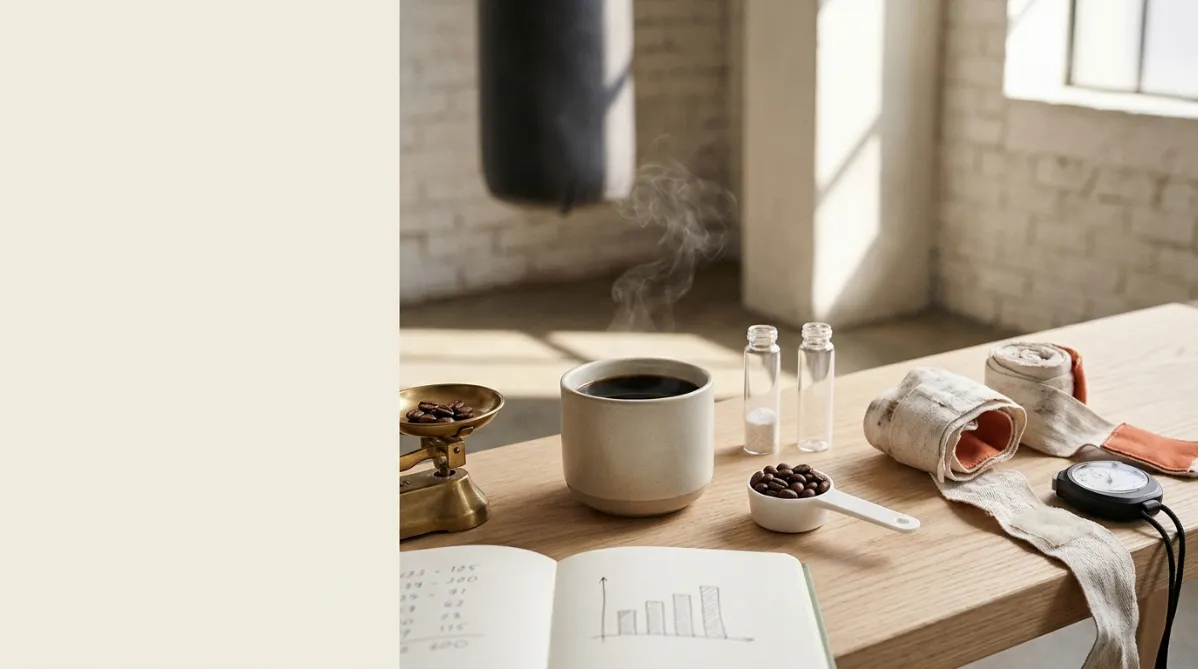
A wide, editorial-style still life shot from a slightly elevated angle on a pale oak gym bench, bathed in soft morning window light. In the center sits a matte ceramic cup of black coffee with delicate steam curling upward, flanked by a small white scoop of coffee beans and two identical glass vials, one filled with a few grains of fine powder and one empty, hinting at dose comparison. Next to the cup rests a pair of worn white boxing hand wraps, loosely coiled, and a slim black stopwatch with its face softly visible. In the foreground, a minimalist notebook lies open with blurred handwritten numbers and a simple pen sketch of a bar graph with bars of equal height, subtle and unreadable, suggesting a null result without any legible text. A small brass kitchen scale sits to the side with a few coffee beans on its tray.

In the soft-focus background, a boxing gym interior is visible: a hanging heavy bag in muted charcoal, exposed brick wall painted off-white, and tall windows casting long diagonal light across the floor. The color palette is warm and restrained: cream, sand, espresso brown, soft charcoal, with a single accent of muted terracotta orange in the hand wraps and a faint sage green in the notebook cover. Shallow depth of field with creamy bokeh, fine film grain, and gentle shadows give it a contemporary lifestyle-magazine and wellness-journal feel. The composition leaves generous negative space on the left third for headline overlay. Clean, calm, trendy, and tactile, with natural textures like wood grain, ceramic glaze, and cotton fabric. No people, no text, no futuristic elements.
science research

Low-Dose Caffeine Coffee Gave Elite Fighters Zero Sprint Boost

BY DR. GYMBRO ·

Think your pre-workout coffee is supercharging your sprints? A new randomized, double-blind crossover trial in 15 national-level combat athletes found no performance benefit from caffeine doses of 1.5 and 3 mg/kg, about 100 and 200 mg for a 68 kg athlete. Peak power, mean power, fatigue index and even estimated energy system contributions did not differ from decaf. But this is a small null result, not proof that caffeine fails, and most positive studies use capsules at 3–6 mg/kg. Here is the dose math, the caveats and what to actually do before your next hard session.
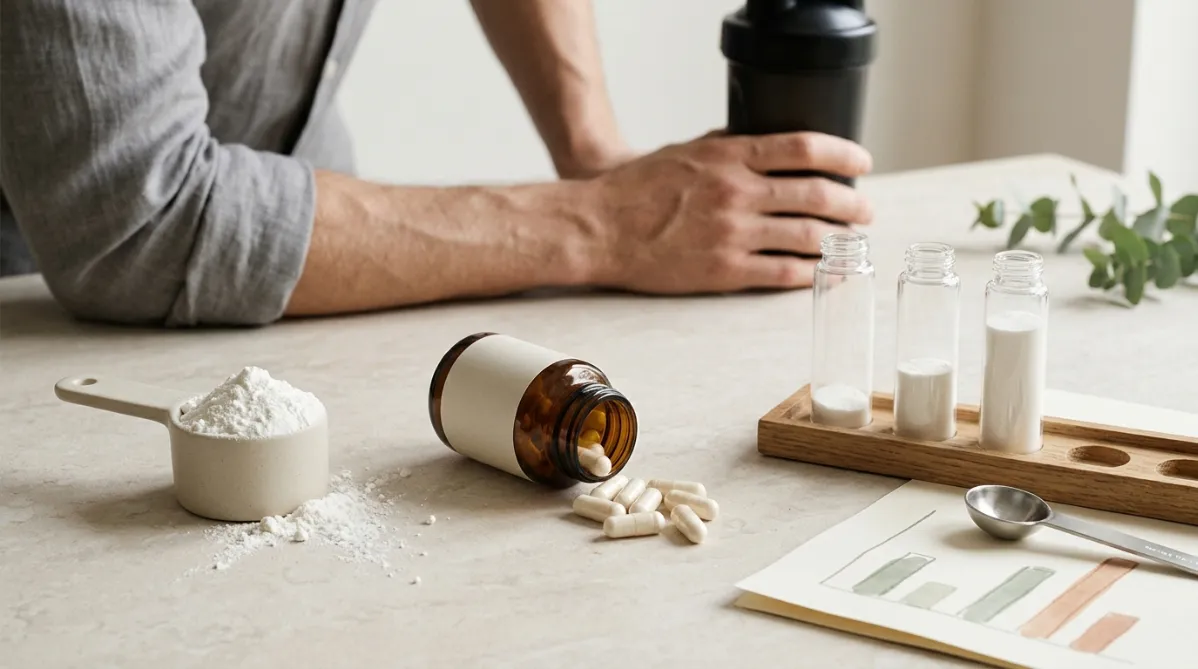
A modern editorial still life photographed from a slightly elevated angle on a pale, matte stone surface in soft natural window light. On the left, a heaping mound of fine white creatine monohydrate powder spills from a matte ceramic scoop, with a few crisp grains scattered across the surface. In the center, a small, minimalist amber glass capsule bottle sits tipped on its side, with a handful of off-white capsules spilling out. The label is blank and clean. On the right, a neat row of three clear glass lab-style vials rests on a slim oak tray. The vials hold different amounts of white powder: the first nearly empty, the second slightly fuller, the third filled almost to the brim. This quietly suggests the difference in dose and result. Beside the tray lies a simple stainless steel measuring spoon and a folded sheet of cream paper with soft, abstract bar-chart lines in muted sage green and terracotta. The lines are hand-drawn and unlabeled.

Behind the objects, slightly out of focus, a lean athletic forearm in a gray linen sleeve rests on the edge of the surface, one hand loosely holding a matte shaker bottle. This hints at a training context without showing a face. A single sprig of eucalyptus in the corner adds a soft organic touch.

The palette is warm neutral: bone white, oatmeal, soft sage, muted terracotta, and touches of amber. Shadows are gentle and long, with a shallow depth of field that gives creamy bokeh in the background. The mood is calm, clean, and trustworthy, like a premium health and science journal's feature spread, with generous negative space at the top and right for headline overlay. The composition is wide, balanced, and uncluttered, with subtle film-like grain and a natural, true-to-life color grade. No text, no logos, no futuristic elements.
nutrition

Kre-Alkalyn's Label Dose Didn't Lift Muscle Creatine, Biopsies Show

BY DR. GYMBRO ·

Buffered creatine like Kre-Alkalyn promises better absorption, lower doses and less bloating. A double-blind Texas A&M trial put that to the test with actual muscle biopsies in 36 trained lifters over 28 days. At the label dose of 1.5 g/day, muscle creatine barely moved, while monohydrate raised it clearly more. Strength, body composition and side effects showed no advantage for the buffered product. Here is what the numbers show and how to dose creatine instead.
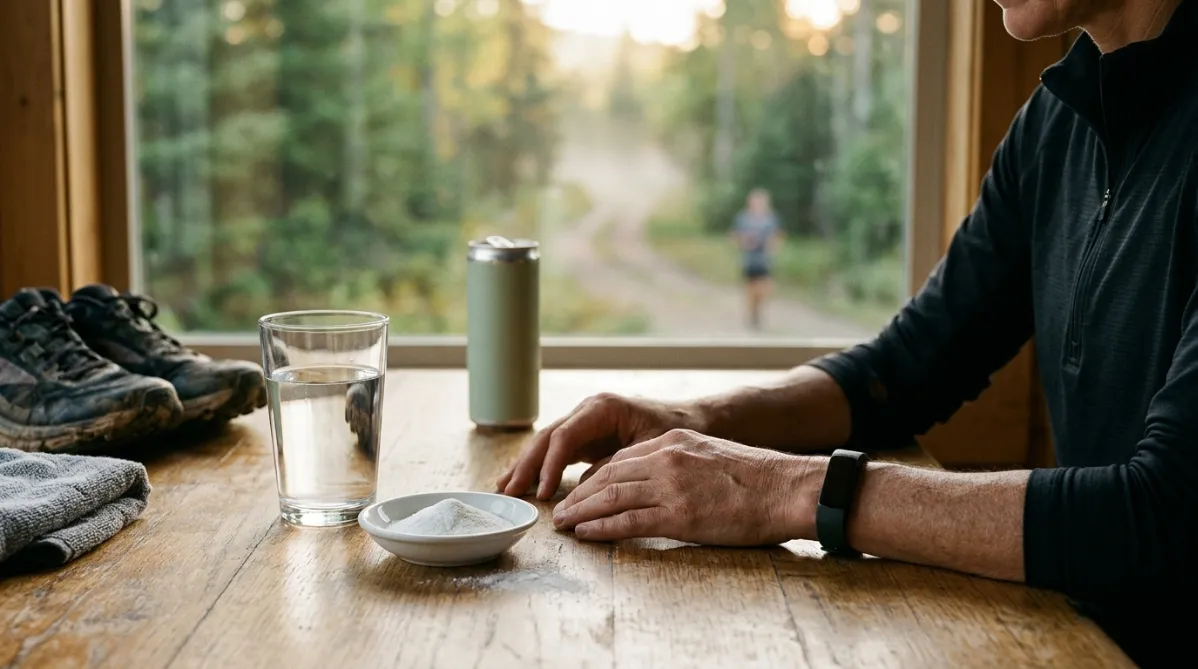
A landscape editorial photograph of a lone runner's hands resting on a weathered wooden table beside a small white ceramic dish of fine white powder and a clear glass of water, shot in soft morning light. A slim matte aluminum energy drink can, unbranded with a minimalist pale sage-green label, stands slightly out of focus in the background, with a single scoop of powder dusted lightly on the tabletop. A pair of worn running shoes and a folded gray towel sit at the edge of the frame. Through a large window behind them, a blurred misty trail winds through green trees at sunrise, with warm golden light spilling across the scene.

The color palette is calm and modern: creamy off-white, sage green, warm honey gold, and soft charcoal. The composition follows the rule of thirds, with the dish and glass in the lower left third and generous negative space on the right for a title overlay. The depth of field is shallow, with a crisp focus on the powder's delicate texture and tiny glints of light on the glass rim. The mood is clean, thoughtful, and quietly energetic, like a contemporary health and science magazine feature. Natural grain, subtle film-like softness, and gentle shadows give it an authentic lifestyle-editorial look. There are no text, logos, or futuristic elements, only tactile, real-world materials like wood, ceramic, glass, cotton, and metal.
nutrition

The Energy Drink Ingredient That Boosts Endurance on Its Own

BY DR. GYMBRO ·

Everyone talks about caffeine, but the other ingredient on the energy drink can may be quietly doing its own work. A 2018 meta-analysis of 10 studies found that isolated taurine improved endurance performance (Hedges' g = 0.40), and a single dose appeared to be enough. Neither dose (1–6 g) nor supplementation length changed the effect in a meaningful way. The catch is a small evidence base and wide confidence intervals, so this is a promising signal, not a guarantee. Here's what the study found and how to try taurine sensibly.
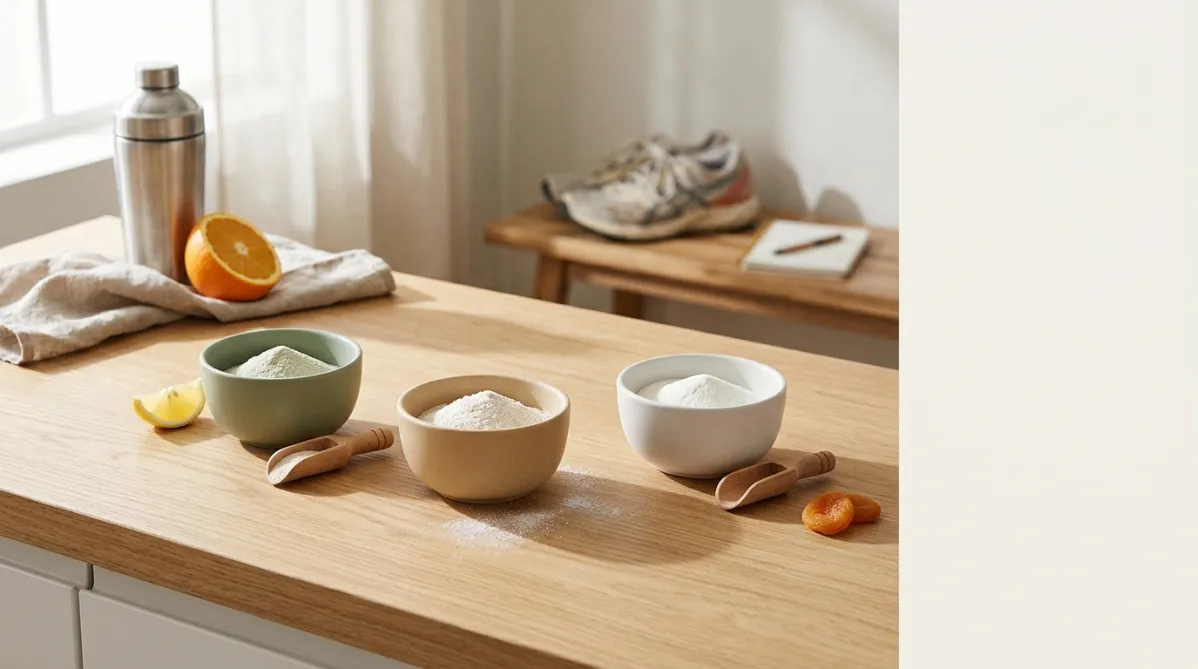
A landscape editorial photograph of a clean, sunlit kitchen-counter or light oak table, shot from slightly above at a gentle angle. Three small matte ceramic bowls in muted sage green, warm sand, and soft white sit in a loose row. Each holds a different fine white powder, and each has a small wooden scoop resting beside it. The middle bowl is slightly closer to the camera and sharper in focus, with a faint dusting of powder spilling onto the surface. In the soft-focus background, a stainless steel shaker bottle and a half-peeled orange sit beside a folded linen napkin, suggesting citrus without being literal. A single lemon wedge sits near the left bowl, and a small dried apricot sits near the right, a subtle visual nod to citrate and pyruvate.

In the background, a blurred athletic scene: a running shoe resting on a wooden bench and a small notebook with a pen, suggesting a training log. Soft diffused morning light enters from the left through a window and casts long, gentle shadows. The palette is warm neutrals, creamy whites, soft greens, and a hint of terracotta orange. The look is a modern wellness magazine with a shallow depth of field, a fine-grain film feel, and generous negative space on the right third of the frame for title text. The mood is calm, trustworthy, and scientific yet approachable, with no text, labels, or logos.
nutrition

Creatine Pyruvate vs Citrate: One Form Kept Force Up Longer

BY DR. GYMBRO ·

Two fancy creatine forms beat placebo in a 28-day trial, but one kept muscle force elevated through all ten all-out intervals while the other faded. Creatine pyruvate raised force in every interval (p < 0.001), whereas creatine citrate's benefit disappeared by the sixth interval. Only pyruvate also improved relaxation velocity and resting oxygen consumption. Before you ditch your tub, there's a major catch: the study had no creatine monohydrate group. Here's what the numbers show, what they can't, and how to choose.
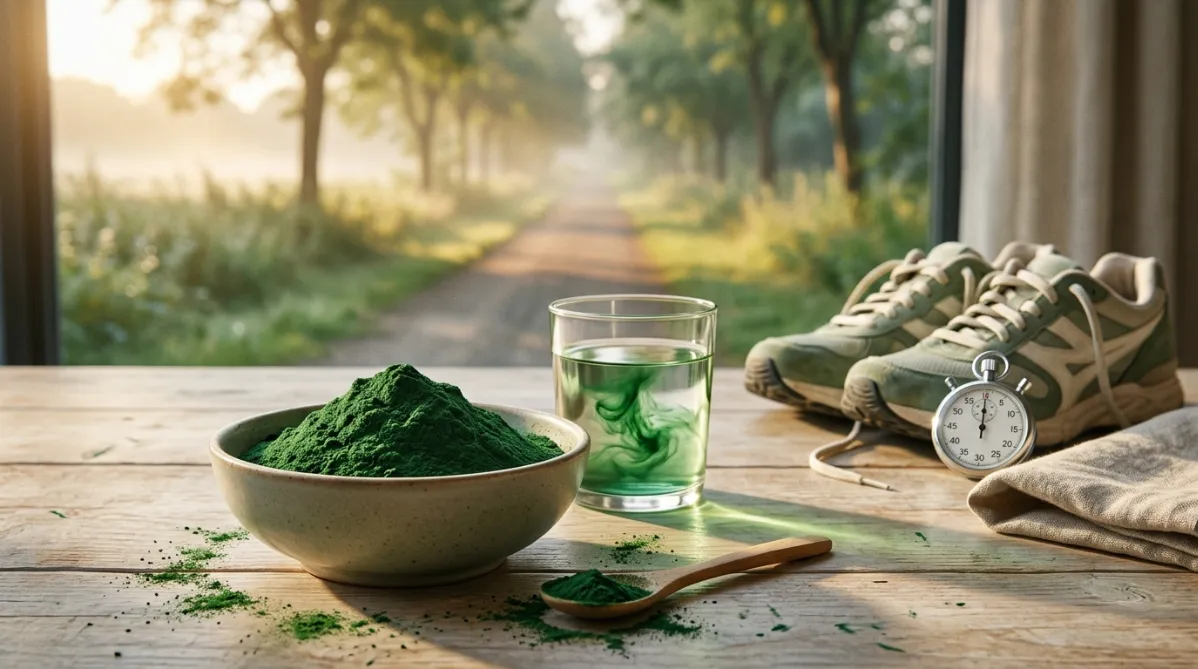
A wide, landscape editorial photograph with soft natural morning light. In the foreground, a rustic matte ceramic bowl rests on a pale oak wooden table, filled with vivid deep-green spirulina powder heaped in a gentle mound. A small wooden spoon dusted with the powder lies beside it, and a few scattered green flecks dust the surface. Next to the bowl sits a clear glass of water with a swirl of emerald green just blending in, catching sunlight and casting soft green-tinted shadows.

In the middle ground, slightly out of focus, a pair of worn running shoes in muted sage and cream tones sits on the edge of the table, laces loosely undone. A simple analog stopwatch with a clean white face lies beside them, its hands frozen at a moment suggesting a close finish. A folded linen towel in warm oatmeal tone drapes casually nearby.

The background is a softly blurred outdoor setting seen through a large window: a quiet tree-lined running path at dawn, with golden-hazy light, dewy greenery, and a faint mist. The color palette is calm and modern: deep emerald, sage, cream, warm wood, and touches of soft gold. The composition leaves generous negative space on the right side for headline text, with a shallow depth of field, crisp detail on the powder texture, and a clean, minimalist, lifestyle-magazine aesthetic. Subtle film-like grain, natural shadows, and a fresh, healthy, energetic mood. No people, no text, no logos.
nutrition

Spirulina Helped Runners Last 32% Longer—Here's the Catch

BY DR. GYMBRO ·

Runners who took spirulina for four weeks lasted about 32% longer in an all-out effort after a brutal two-hour run. The same study found a 10.9% jump in fat oxidation and higher levels of the antioxidant glutathione. But before you stock up, there's a catch: only nine men took part, and the real-world gain was roughly 39 seconds. Here's what the research shows, why it might work, and how to try it safely.
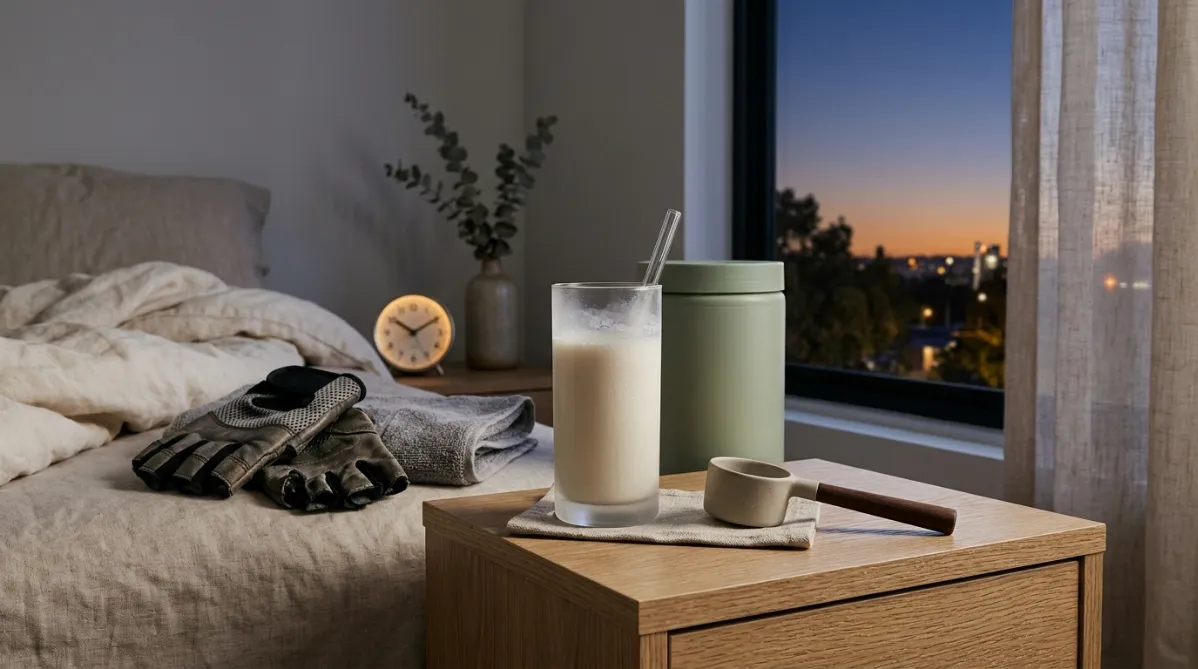
A quiet bedside scene at dusk, shot in soft natural light with a shallow depth of field. A tall frosted glass of creamy, pale-white shake sits on a light oak nightstand, with a thin film of condensation on the glass and a faint milky residue near the rim. Beside it, a matte ceramic scoop rests on a small linen coaster. A minimalist tub of unbranded protein powder in muted sage green sits slightly out of focus in the background.

To the left, a neatly made bed with oatmeal-colored linen sheets and a rumpled cream duvet. A pair of worn lifting gloves and a folded gray gym towel sit on the edge of the bed, suggesting an evening workout just finished. A small analog alarm clock reads about 10:30 PM, its soft face glowing faintly. A sprig of dried eucalyptus in a small stoneware bud vase adds an organic touch.

Through a large window on the right, deep indigo twilight fades into a warm amber horizon, and the last light spills across the wall in long, gentle gradients. A sheer curtain moves slightly. The palette is warm neutrals (cream, oak, sand, soft terracotta) with a few muted blue-violet accents from the evening sky.

The composition uses the rule of thirds, with the glass at the left-center foreground and generous negative space on the right, where headline text could sit. The mood is calm, restorative, and editorial, like a modern wellness and nutrition journal. The lighting is gentle and diffused, with subtle film grain and slightly lifted shadows. The textures of linen, wood, glass, and ceramic are crisp. The image is clean and uncluttered, with no text, logos, or people, and no futuristic or sci-fi elements.
nutrition

The 40 g Bedtime Shake: What Pre-Sleep Casein Does Overnight

BY DR. GYMBRO ·

Lift in the evening, then fast for eight hours: does that hurt recovery? A 2012 study gave 16 young men 40 g of casein 30 minutes before bed and tracked what happened overnight. The protein was digested and absorbed during sleep, whole-body protein synthesis jumped (311 vs 246 µmol/kg), and net protein balance flipped from negative to positive. Muscle protein synthesis was about 22% higher, though only borderline significant. Here is what the findings mean, what they don't, and how to use them.
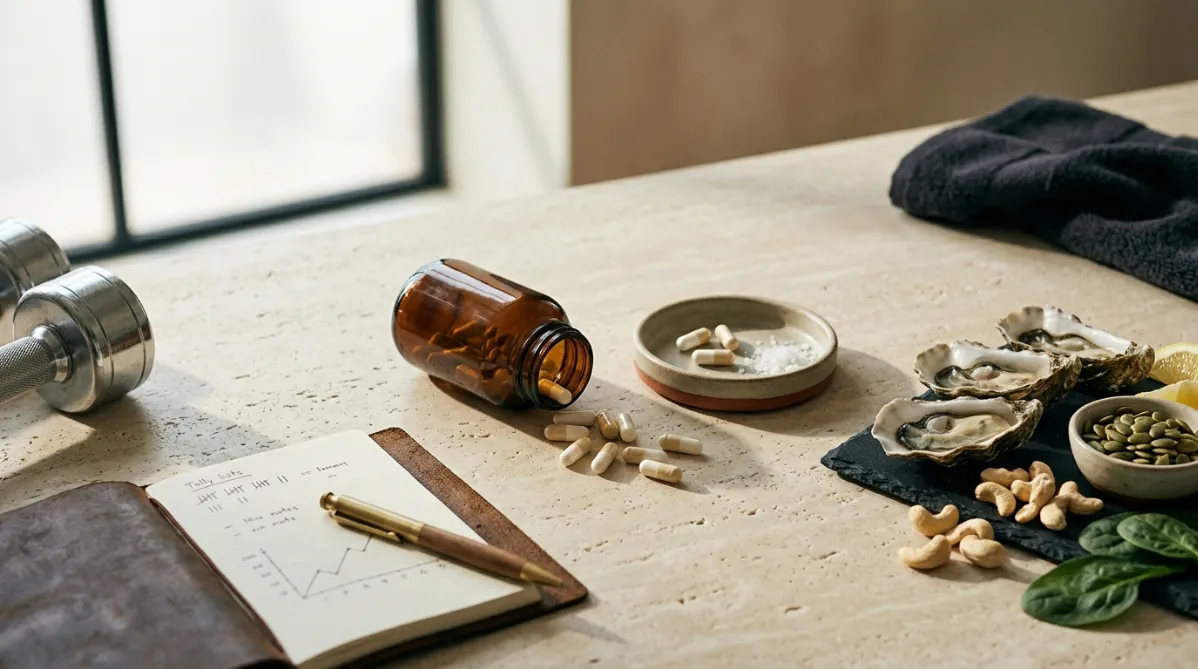
A clean, editorial still life shot from a slightly elevated angle on a pale oatmeal-colored stone countertop, lit by soft natural window light from the left that casts long, gentle shadows. In the center sits an open, unlabeled amber glass supplement bottle on its side, with a small scatter of cream and white capsules spilling toward the viewer. Beside it, a matte ceramic dish holds a few capsules and a pinch of coarse sea salt. To the right, a neatly arranged group of whole foods that are natural zinc and magnesium sources: halved oysters on a small slate board, a small bowl of pumpkin seeds, a handful of raw cashews, and a few dark green spinach leaves. In the left foreground, a worn leather gym notebook lies open with minimal handwritten tally marks and a simple hand-drawn flat line graph in dark ink, with a brass pen resting across it. A single chrome dumbbell handle edges into the frame at the far left, softly out of focus, and a folded charcoal gym towel sits at the top right corner. The palette is warm and muted: sand, cream, sage green, amber, and charcoal, with a subtle terracotta accent in the ceramic dish. The depth of field is shallow, with the capsules and bottle in crisp focus and the background gently blurred into a soft beige haze. The mood is calm, thoughtful, and skeptical, like a modern health and science magazine feature. The composition leaves generous negative space on the upper right for headline text. The texture is tactile and fine-grained, with a subtle film-like softness and natural contrast. Wide landscape 16:9 framing.
science research

ZMA for Testosterone? 8 Weeks in Lifters Found Nothing

BY DR. GYMBRO ·

ZMA built its reputation on bold testosterone claims, a link to the BALCO scandal, and an early football study that seemed to show big gains. Then researchers put it to a tighter test: 42 resistance-trained men, double-blind, eight weeks of standardized training. Serum zinc rose 11-17%, but not significantly, and hormones, strength, body composition, endurance and anaerobic power were no different from placebo. Here's what the study did and didn't show, why deficiency is a separate question, and what lifters should do instead.
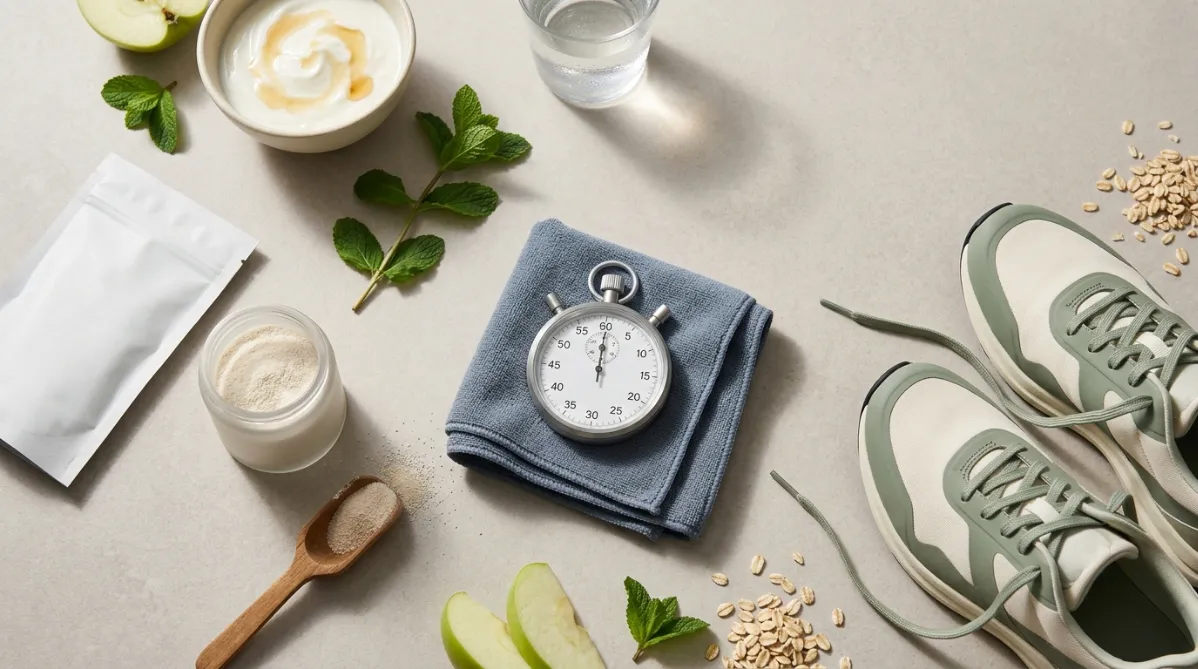
A wide, editorial-style flat lay photographed from above on a pale, warm-gray stone surface lit by soft natural window light. On the left, a matte white supplement sachet and a small frosted glass jar of off-white probiotic powder sit beside a wooden scoop dusted with fine granules. In the center, a modern minimalist stopwatch with a brushed silver case and crisp white face rests on a folded slate-blue running towel, its hands frozen just past the half-minute mark. On the right, a pair of sleek running shoes in cream and sage green are angled diagonally, with a few strands of laces trailing across the surface. Scattered around the arrangement are fresh, natural gut-health cues: a halved kefir-colored ceramic bowl of creamy yogurt with a drizzle of honey, a few sprigs of fresh mint, sliced green apple, and a handful of raw oats. A small glass of water with delicate condensation catches a soft highlight in the background. The color palette is calm and refined: sage green, cream, soft slate blue, and touches of warm honey gold against the neutral stone. Shadows are long and gentle, creating depth and a quiet, premium wellness-journal mood. The shallow depth of field softly blurs the edges, leaving the stopwatch and probiotic jar in crisp focus. Negative space on the upper right of the composition leaves room for a headline overlay. The overall feel is clean, modern, and trendy, like a contemporary health and sports science magazine cover, with realistic textures, natural tones, and no futuristic or digital elements.
nutrition

SLAB51 Probiotic: One Week Added 33 Seconds for Elite Athletes

BY DR. GYMBRO ·

One week of the multi-strain probiotic SLAB51 helped elite athletes last about 33 seconds longer on a treadmill test, but a single dose did nothing and VO2max didn't change. The randomized, double-blind crossover trial also found higher levels of the antioxidant enzyme SOD before exercise. So what is SLAB51, and why might gut bacteria influence endurance at all? This article breaks down the study design, the numbers, and what athletes can realistically take from them. It also covers the limits: a small sample of elite men and a very short intervention.
A bright, minimalist editorial still life shot from a slightly elevated three-quarter angle on a pale oat-colored stone countertop, bathed in soft natural window light with gentle long shadows. In the center sit two matching matte white supplement scoops, side by side. One is heaped with fine white crystalline powder, the other holds an almost identical pile, so the viewer is invited to compare them. Beside them are two simple frosted glass tumblers of cloudy water, each with a small whisper of powder swirling at the bottom. A third glass of clear water sits slightly apart, as a quiet nod to the placebo.

Scattered around the scene are fresh, sliced watermelon wedges with vivid coral-pink flesh and pale green rinds, and a few sliced green apples with crisp white interiors, hinting at the natural sources of citrulline and malic acid. A small brushed-brass measuring spoon and a minimalist matte sage-green shaker bottle rest at the edge of the frame. Off to one side, a clean ceramic dish holds a few loose grains of powder, and a slim linen notebook with a pencil lies open to a blank page, suggesting data and study notes without any legible text.

The color palette is soft and modern: warm cream, blush coral, sage green, and touches of brass, with a faintly blurred background of a sunlit kitchen or studio with a pale plaster wall. Shallow depth of field keeps the scoops tack sharp while the background melts into a creamy bokeh. The composition leaves generous negative space on the left third of the frame for a title overlay. The overall mood is calm, trustworthy, and trendy, like a contemporary wellness and science journal cover, with crisp detail, subtle film-like grain, and a clean, airy, balanced feel.
science research

Citrulline Malate vs L-Citrulline: Does Malate Actually Matter?

BY DR. GYMBRO ·

Citrulline malate or plain L-citrulline? A new randomized, double-blind, placebo-controlled crossover trial in 43 trained adults tested both against placebo, and the answer might save you money. Neither form improved strength, power, jump performance, rep output, or perceived exertion, and malate added nothing on top of matched citrulline. Here is what the study measured, what the doses were, and the caveats that keep this from being the final word. If you are deciding what to put in your shaker, start here.
A wide, editorial-style flat lay photographed from slightly above on a pale oak gym bench with a soft matte finish. On the left, a small white ceramic cup of black coffee sits on a matching saucer, with a thin curl of steam rising and catching warm window light. Beside it is a second, slightly larger handleless stoneware mug in muted sage green, also filled with coffee, so the pair suggests one to two cups. In the center-right foreground rests a sleek matte-black steel barbell plate, partly overlapping a brushed-steel dumbbell with fine knurling. A folded charcoal gym towel and a clean white chalk-dusted wrist strap lie casually to one side. A small scatter of whole roasted coffee beans spills across the bench in front of the cups, glossy and deep brown. Near the bottom edge, a minimalist analog kitchen scale in soft cream with a thin black needle hints at precise dosing, without any readable numbers or text.

Soft morning sunlight streams in from the upper left, creating long, gentle shadows and a warm golden glow against cool neutral tones. The background is a softly blurred, airy home gym or boutique training studio with out-of-focus squat rack uprights, pale concrete walls, and a leafy green plant in a terracotta pot adding a touch of organic color. The palette is restrained and modern: warm cream, espresso brown, charcoal, sage green, and hints of brushed silver. Shallow depth of field keeps the cups and beans tack sharp while the background melts into creamy bokeh. The composition leaves generous negative space on the right third for a title overlay, with a balanced, calm, premium magazine feel, like a contemporary wellness and sports science journal. High-resolution, natural color grading, subtle film grain, realistic textures on ceramic, steel, and coffee crema.
nutrition

How Much Caffeine Before Lifting? A Meta-Analysis Says 1–2 mg/kg Still Works

BY DR. GYMBRO ·

The standard advice for caffeine before lifting is 3–6 mg/kg, which can mean several cups of coffee or a heavy scoop of pre-workout. A 2022 meta-analysis of 12 trials found that doses of just 0.9–2 mg/kg still improved muscular strength (d ≈ 0.17), muscular endurance (d ≈ 0.21), and mean bar velocity (d ≈ 0.56). For many lifters, that's about one to two cups of coffee. The effects are modest and the evidence comes from acute, single-session studies, but the findings suggest you may be able to get a similar benefit with less caffeine.
A cyclist in a fitted matte-black kit, shot from a low three-quarter angle, rides a sunlit country road at early morning, slightly out of focus with soft motion blur on the wheels. In the foreground on the left sits a rustic wooden table with a tall glass of deep magenta beetroot juice. Condensation beads on the glass, and the light catches its vivid jewel-toned color. Beside it lie two whole beetroots with their leafy red-veined greens still attached, and one halved beet shows concentric crimson-and-pink rings. A small linen napkin and a scatter of water droplets add an editorial still-life feel.

The background is a gently rolling landscape with golden-green fields and a thin ribbon of asphalt curving toward the horizon. Pale mist hangs low and warm sunlight comes from the right, creating long soft shadows and a golden rim light on the glass and the cyclist's silhouette. The shallow depth of field keeps the juice and beets crisp while the rider stays a dreamy blurred suggestion of speed.

The palette is rich magenta, burgundy, warm cream, sage green, and soft gold, with muted, slightly desaturated tones in the background so the beetroot color stands out. The composition follows the rule of thirds, with the still-life in the lower left third and open negative space in the upper right for the title. The overall look is a clean, modern lifestyle-magazine photograph with natural film-like grain, calm and athletic, and no text, logos, or futuristic elements.
nutrition

Beetroot Juice Before a Time Trial: How 0.5 L Cut 4-km and 16.1-km Cycling Times by Nearly 3%

BY DR. GYMBRO ·

A small but influential 2011 crossover trial tested whether a single drink of beetroot juice could speed up real cycling time trials. Nine competitive male cyclists drank 0.5 L of nitrate-rich juice (about 6.2 mmol nitrate) roughly 2.5 hours before racing. Plasma nitrite more than doubled, mean power rose, and 4-km and 16.1-km times improved by 2.8% and 2.7%. Crucially, oxygen uptake stayed the same, pointing to better cycling economy rather than a bigger aerobic engine. Here is the protocol, the numbers, and the limits of what the data can tell us.
A calm, modern editorial still life shot from a slightly elevated angle on a pale oak wooden table, bathed in soft morning window light with gentle diffused shadows. In the center-left, a small matte ceramic bowl in warm oatmeal tone holds a measured heap of fine, creamy-white collagen peptide powder, with a minimalist wooden scoop resting beside it. Next to it sits a clear glass of water with delicate condensation. On the right side of the frame, a rolled-up sage green yoga mat leans against a light plaster wall, and a pair of clean, minimalist white running sneakers sits slightly off-center, one tilted to show the heel and the back of the ankle area. A thick, natural-fiber resistance band in muted terracotta is coiled loosely in the foreground. In the background, a wooden step or low plyometric box suggests calf-raise exercise, softly out of focus. A small linen notebook lies open with a handwritten simple line graph showing two rising lines, one steeper than the other, with a thin pencil beside it, and no legible text. A sprig of dried eucalyptus in a slim bud vase adds an organic touch. The palette is warm neutrals: cream, oat, sand, soft terracotta, sage, with a subtle pop of muted coral. The mood is thoughtful, health-conscious, and reassuring, like a premium wellness and sports science magazine. Shallow depth of field, crisp texture on the powder and wood grain, subtle film-like grain, generous negative space on the upper left of the frame for headline overlay. Landscape 16:9 composition, clean, uncluttered, airy, and contemporary.
nutrition

The 5-Gram Achilles Hack: Why Collagen Peptides Made Early Rehab Gains Jump Past the Clinical Threshold

BY DR. GYMBRO ·

Stalled Achilles rehab is frustrating, and a small pilot study suggests a 5 g/day collagen peptide supplement might help early progress. Over the first 3 months, the collagen group's VISA-A score rose 12.6 points versus 5.3 on placebo, with a clinically meaningful threshold of about 6.5. Everyone, however, was doing the same bi-daily calf-strengthening program, so exercise remains the backbone. Here's the protocol, the numbers, who it applies to, and why the 20-patient sample means we should stay cautious.
A wide, editorial still life photographed in soft natural window light on a pale oatmeal-colored linen surface. At the center sits a small, rustic ceramic dish holding a handful of dried golden-orange Rhodiola rosea root pieces and a few fresh, fleshy green-gray succulent rosettes with rosy-pink tips. Beside it, a single matte amber glass capsule bottle lies on its side, with two cream-colored capsules spilling out. On the left, a minimalist analog stopwatch with a brushed brass case rests slightly out of focus, its hands suggesting a duration just past the quarter-hour mark. On the right, a worn, chalk-dusted steel kettlebell handle and a folded charcoal gym towel fill the negative space, hinting at lifting without showing a full gym scene.

In the foreground, a neat row of seven tiny ceramic pill cups arranged in a gentle diagonal line, the first cup holding one capsule and the rest sitting empty, as a quiet visual metaphor for a single dose versus daily dosing. A sprig of dried alpine moss and a few small speckled pebbles add organic texture. The background is a softly blurred warm-gray plaster wall with a gentle gradient shadow cast by a window frame, creating diagonal light stripes across the scene.

The palette is muted and earthy: sage green, terracotta, warm cream, brushed brass, and soft charcoal, with one subtle pop of coral from the Rhodiola tips. Shallow depth of field, crisp focus on the root and capsules, and fine film-like grain. The composition leaves generous clean negative space in the upper left for a headline overlay. The overall feel is a modern wellness and science journal: calm, tactile, minimal, and sophisticated, with a slightly moody, high-end magazine look. There is no text, no people, and no futuristic elements.
nutrition

200 mg of Rhodiola Bought Lifters 24 Extra Seconds. Then Four Weeks of Daily Dosing Added Nothing

BY DR. GYMBRO ·

A single 200 mg dose of Rhodiola rosea taken an hour before exercise nudged time to exhaustion from 16.8 to 17.2 minutes and raised VO2peak in a double-blind crossover trial. The twist is that four weeks of daily dosing didn't build on that effect or change any measured variable. The gain was small, about 24 seconds, and strength, reaction time and attention didn't budge. Here is what the study actually found, who might try an acute dose, and why you shouldn't count on "loading" rhodiola.
Creatine Before or After Your Workout? A Small Study Gives Post-Workout the Edge
nutrition

Creatine Before or After Your Workout? A Small Study Gives Post-Workout the Edge

BY DR. GYMBRO ·

Should you take creatine before or after you lift? A 2013 study of 19 male bodybuilders found that post-workout dosing edged out pre-workout on lean mass, fat mass and bench press. But the formal statistical test showed no significant difference between the groups, and the authors relied on a cautious "possibly more beneficial" inference. Here is what the data actually say, why the sample size matters, and how to apply the findings with a simple 5 g daily routine.
A landscape, editorial-style flat lay photographed from above on a pale oak gym bench or a matte light-gray concrete surface. On the left side, a clear glass of water sits next to a small matte white ceramic bowl of fine white creatine powder, with a wooden scoop resting beside it and a few loose grains scattered naturally on the surface. In the center, a modern analog wall-style clock face is replaced by a simple minimalist stopwatch in brushed steel, its hands paused, subtly suggesting timing without any text or numbers emphasized. On the right, a neatly folded charcoal gym towel and a single chalk-dusted dumbbell handle enter the frame at the edge, with a faint dusting of white chalk on the wood. A small linen notebook with a pencil rests slightly off-center, its pages blank, hinting at data and study without any readable writing.

The color palette is soft and restrained: warm cream, oatmeal, sage green, and muted slate, with one accent of terracotta orange in the pencil or a small ceramic dish. Light comes from a large window at the upper left, casting long, gentle diagonal shadows and a soft highlight across the glass of water, creating delicate caustic reflections on the surface. The depth of field is shallow, with the creatine bowl and scoop in crisp focus and the edges softly blurred. The composition leaves generous negative space on the upper right for a headline overlay. The overall feel is calm, clean, and contemporary, like a wellness and science journal's cover image, with natural textures, subtle film grain, and a refined, premium magazine look. No people, no logos, no text, and no futuristic elements.
nutrition

Creatine Before or After Your Workout? A Small Study Gives Post-Workout the Edge

BY DR. GYMBRO ·

Should you take creatine before or after you lift? A 2013 study of 19 male bodybuilders found that post-workout dosing edged out pre-workout on lean mass, fat mass and bench press. But the formal statistical test showed no significant difference between the groups, and the authors relied on a cautious "possibly more beneficial" inference. Here is what the data actually say, why the sample size matters, and how to apply the findings with a simple 5 g daily routine.
A wide, editorial-style still life photographed on a pale limestone countertop in soft morning window light. At the center sits a matte white scoop of fine white powder resting beside a frosted glass tumbler of cloudy, pale pink-orange water, with a few watermelon slices and a halved wedge showing glossy coral flesh and thin green rind, a nod to citrulline's natural source. To the left, a neatly folded charcoal gym towel and a brushed steel dumbbell rest at the edge of the frame, slightly out of focus. To the right, a minimalist open notebook with a few hand-drawn tally marks and a simple line graph sketched in black ink rises toward the right edge, next to a slim mechanical pencil and a small analog stopwatch with a clean white face. A few loose grains of powder are scattered across the stone, catching the light. Soft diagonal shadows fall across the surface from a nearby window, and a gentle sage-green wall in the background adds calm contrast. The palette is warm cream, watermelon coral, sage green, and soft graphite gray, with plenty of negative space on the upper left for headline overlay. Shallow depth of field, crisp focus on the powder scoop and watermelon, subtle film grain, natural tones, and a clean, modern wellness-journal aesthetic. Shot at eye level with a slight downward angle, like a contemporary health and science magazine cover. No text, no logos, no people.
nutrition

8 g Citrulline Malate = 53% More Reps and 40% Less Soreness? What the Study Shows

BY DR. GYMBRO ·

A 2010 crossover trial found that 8 g of citrulline malate was linked to about 53% more bench press reps in the final evaluated set and roughly 40% less soreness at 24 and 48 hours. The catch is that the biggest rep gain showed up late in the session, once fatigue had built up. Here is what the study actually tested, how to apply the dose and timing sensibly, who stands to benefit, and why the 14.63% rate of stomach discomfort and the study's limits deserve attention.
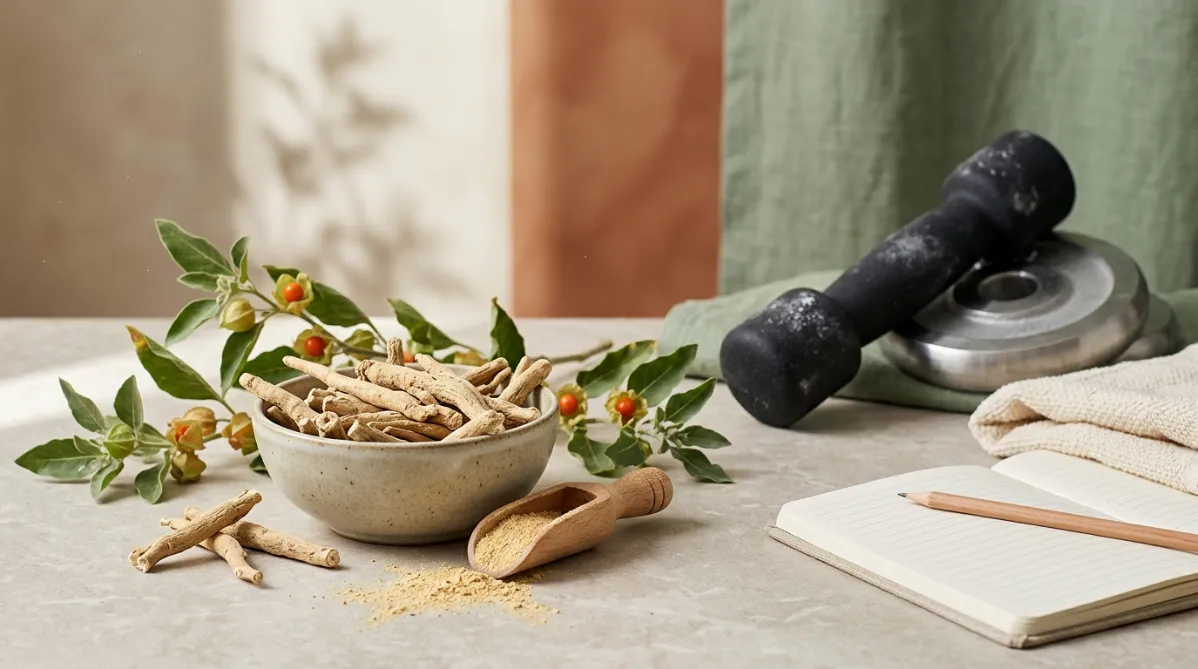
A wide editorial still life on a pale, warm-gray stone surface lit by soft morning window light from the left. In the foreground, a rustic ceramic bowl in matte oatmeal glaze holds dried ashwagandha roots, pale tan and gnarled, with a few scattered beside it. A small wooden scoop dusted with fine golden-beige powder rests next to the bowl. Behind them, a few olive-green ashwagandha sprigs with small orange-red berries in papery husks arc across the frame, adding a quiet pop of color.

Midground right: a matte black chalk-dusted dumbbell handle and a single brushed-steel weight plate lean casually against a linen-textured backdrop in muted sage. A folded cream cotton towel and a slim notebook with a pencil suggest a training log. The notebook is open to blank, softly lined pages with no legible text.

The background fades into a gentle blur of neutral beige and soft terracotta tones, with a hint of a plant shadow cast across the wall in dappled light. Fine dust and powder particles float in the light beams, giving a tactile, organic feel.

The composition follows the rule of thirds: botanical elements on the left and center, gym elements on the right, and negative space in the upper right for headline overlay. Shallow depth of field, crisp focus on the roots and powder, creamy bokeh behind. Color palette: sage green, warm sand, terracotta, charcoal black, and a touch of burnt orange. The mood is calm, modern, and trustworthy, like a premium wellness and science magazine. Photographed on a 50mm lens, natural grain, subtle film-like contrast, clean minimalist styling, high-end editorial photography.
nutrition

The Ancient Herb That Beat Placebo in an 8-Week Lifting Trial: Strength, Muscle Size and Testosterone

BY DR. GYMBRO ·

Could a centuries-old Ayurvedic root really out-lift a placebo? In an 8-week randomized trial of 57 novice lifters, men taking 300 mg of ashwagandha extract twice daily gained more bench-press strength, more arm and chest size, and a bigger testosterone rise than the placebo group. They also lost more body fat. The catch is that the study was small, short and limited to beginner men. Here's what the data show, how the dosing worked, who might benefit and why you should stay skeptical.

This page is available in